
If your windows still look cloudy right after you clean them, you are probably not dealing with ordinary dirt. Hard water stains leave behind a chalky, spotted film that can make clean glass look neglected, even when the rest of the property is well maintained. For homeowners and property managers trying to figure out how to remove hard water stains from windows, the biggest mistake is usually treating mineral buildup like basic grime.
In Western Pennsylvania, this issue shows up often on windows near sprinklers, hose runoff, and areas that stay wet after rain. Storefront glass, lower-level residential windows, and sun-exposed panes tend to show it fastest. The good news is that many stains can be improved with the right approach. The less pleasant truth is that some have been sitting long enough to etch the glass, which changes what is realistically fixable.
Hard water stains form when water with a high mineral content evaporates and leaves calcium, magnesium, and other deposits behind. At first, those deposits sit on top of the glass. Over time, especially in direct sun, they can bond more firmly to the surface and become much harder to remove.
That is why a standard glass cleaner often does very little. It is made to cut fingerprints, dust, and light grease. Mineral deposits are different. They need either a mild acidic treatment, careful agitation, or both.
The safest place to start is with the least aggressive method. That matters because scratched glass and damaged window frames are more expensive than a few remaining spots.
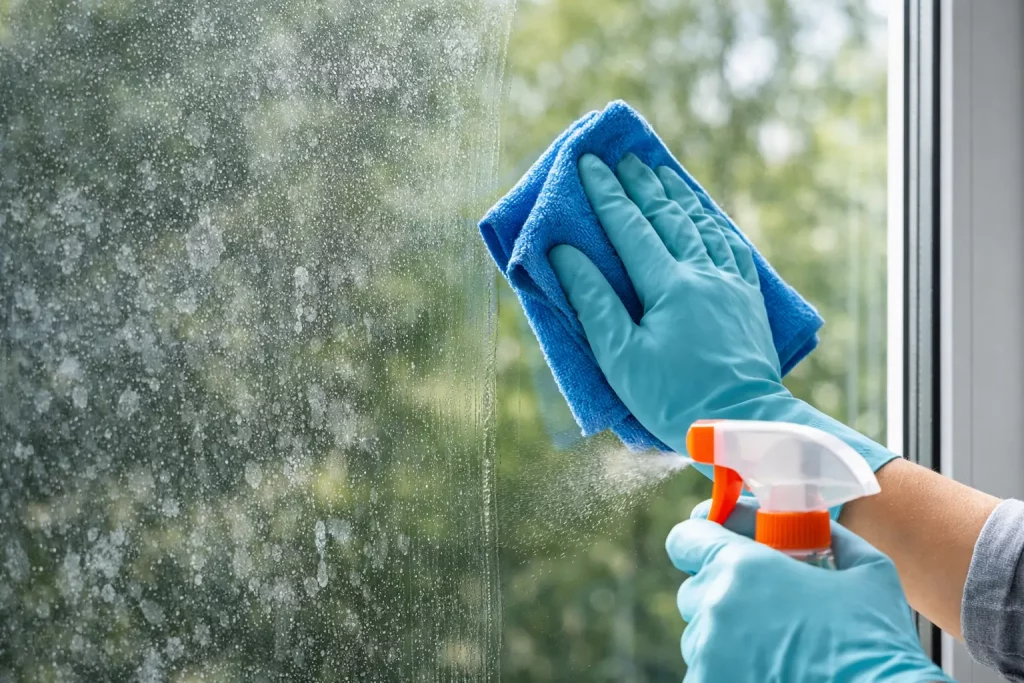
Begin by rinsing the window with clean water to remove loose grit. This step is easy to skip, but it helps prevent dragging debris across the glass while you scrub. Then mix equal parts white vinegar and water in a spray bottle, apply it generously to the stained area, and let it sit for a few minutes. The mild acidity helps loosen mineral buildup.
After that, use a soft microfiber cloth or a non-scratch sponge to work the surface in small circles. You do not need heavy pressure. In fact, pressing too hard usually adds risk without improving results. Once the stain starts to break up, rinse the glass and dry it with a clean towel or squeegee.
For moderate buildup, vinegar alone may not be enough. A paste made from baking soda and a small amount of water can add gentle abrasion. Apply it lightly, rub carefully with a soft cloth, and rinse thoroughly. This can help with stubborn spots, but it should still be treated as a controlled method, not aggressive scrubbing.
If you are working on large commercial glass sections or multiple residential panes, test any solution on a small corner first. Different windows, coatings, and age conditions can affect how the glass responds.
There is a point where hard water stains move from removable residue to surface damage. If the glass looks hazy even after treatment, or if spots seem embedded below the surface, the minerals may have etched the window. At that stage, cleaning can still improve appearance, but it may not restore perfect clarity.
This is where expectations matter. Some customers spend hours trying stronger chemicals, razor blades, or abrasive pads because they assume the stain just needs more effort. That approach often creates a second problem. Scratches, seal damage, and frame discoloration are common when people escalate too quickly.
Professional window cleaners usually assess three things before deciding on a treatment: how old the stain is, whether the deposit is on the glass or etched into it, and whether the surrounding materials can safely handle restoration work. That judgment is part of the value. It is not just about removing spots. It is about knowing what can be cleaned without causing damage.
A lot of window damage starts with good intentions. People want fast results, so they reach for whatever looks strong enough to cut through buildup.
Steel wool, harsh scrapers, and powdered abrasive cleaners are risky on most windows. Even when they seem to work at first, they can leave fine scratches that become more visible in direct sunlight. Razor blades are another gray area. In trained hands, they may be used in limited situations, but on tempered glass or coated surfaces they can cause lasting damage.
You should also be careful with strong acidic cleaners that are not specifically meant for glass. Some can affect frames, seals, painted trim, or nearby landscaping. If the stain is near metal hardware or decorative finishes, product choice matters even more.
The general rule is simple: if a method sounds aggressive, it probably is. Start mild, work carefully, and stop before frustration turns into damage.
Timing affects results more than most people expect. Cleaning glass in direct midday sun can cause solutions to dry too fast, which leaves streaks and reduces contact time on the stain. Early morning, late afternoon, or a mild overcast day is usually better.
Temperature also plays a role. In colder months, certain cleaners are less effective, and in very hot conditions they can flash dry before they have time to work. If you are cleaning outside windows on a multi-story home, retail frontage, or office building, weather and access also become safety issues, not just cleaning concerns.
For many property owners, this is the tipping point between a quick chore and a project that is better outsourced.
Removing the stain is only half the job if the water source stays the same. Sprinklers that hit the glass, overflowing gutters, poor drainage, and repeated hose splashback will keep creating deposits. On commercial properties, entry glass near irrigation zones is especially prone to recurring spotting.
A better long-term fix may involve changing sprinkler direction, reducing overspray, cleaning gutters, or improving runoff around the building. In that sense, stained windows are sometimes a symptom of a broader maintenance issue. If the same panes keep spotting up month after month, it is worth looking at what keeps them wet.
For homeowners, the concern is usually appearance and curb appeal. Water-stained windows make a well-kept home look tired from the outside and dim from the inside. Lower panes, shower-adjacent windows, and glass near decks or patios are common trouble spots.
For commercial properties, the issue is presentation. Spotted storefront windows or office entry glass can make the whole building feel less maintained. That matters when customers, tenants, or visitors notice the front of the property before anything else.
The cleaning method may be similar, but the service decision is different. A homeowner might be dealing with a handful of affected windows. A property manager may be looking at repeat maintenance across a larger building where consistency, scheduling, and safety matter just as much as the final appearance.
If the stains are light and recent, there is a good chance you can improve them yourself with vinegar, a non-scratch cloth, and some patience. If the buildup is heavy, spread across many windows, or located in hard-to-reach areas, professional service is often the more practical choice.
That is especially true if you are dealing with upper-story windows, older glass, or commercial properties where appearance reflects on the business. A professional team can identify whether the stain is removable, choose the safest treatment, and clean the glass without turning one problem into two.
For property owners in the Pittsburgh area, that peace of mind matters. A licensed, insured company with trained technicians brings more than tools. It brings accountability, safer access, and a clearer sense of what results are possible.
At A Clearvue, we see this issue regularly on both homes and commercial buildings, especially where mineral-heavy runoff and sprinkler spray are part of the problem. Sometimes the answer is straightforward cleaning. Sometimes it is restoration plus a recommendation to address the water source so the stains do not return as quickly.
Clean glass makes a property look cared for, but getting there should not involve guesswork or damage. If your windows still look spotted after routine cleaning, the smartest next step is to treat the stain for what it is and not what you hoped it would be.



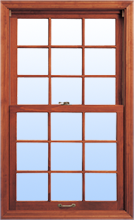
* Suspended Grids / False Grids – the grids are between your panes of glass.


* Fixed / non-removable grids – These are windows with non-removable obstructions making the window look and feel like individual pieces of glass.