
You usually do not notice your gutters until they start causing a problem. Water spilling over the sides during a Pittsburgh rainstorm, dark streaks on the siding, or plants somehow growing from the gutter line are all hard to miss. If you are looking for the top signs your gutters need cleaning, the good news is that most warning signs show up before major damage sets in.
Gutter cleaning is one of those maintenance tasks that is easy to put off, especially when everything looks fine from the ground. But clogged gutters can lead to problems that affect your roofline, siding, foundation, landscaping, and even the safety of walkways around your home or building. For homeowners and property managers in Western Pennsylvania, where leaves, heavy rain, and winter freeze-thaw cycles all play a role, staying ahead of buildup matters.
One of the clearest signs is water overflowing during rain. Gutters are designed to catch roof runoff and direct it safely away from the structure. When water pours over the edge instead of flowing through the downspouts, something is blocking that path. In some cases, the gutter itself is full of leaves, twigs, and roof grit. In others, the clog is packed inside the downspout, so the water has nowhere to go.
Overflow may seem minor at first, but it rarely stays that way. Repeated runoff can stain siding, erode mulch beds, and dump water near the foundation where it does not belong. On commercial buildings, it can also create slippery entry areas and leave a poor first impression around the property.
Another common warning sign is sagging or pulling away from the house. Gutters are not built to carry the extra weight of wet debris for long. Once leaves, sticks, and standing water collect, the fasteners can start to strain. You might notice a section dipping in the middle or separating slightly from the fascia.
At that point, the issue is no longer just cleaning. It may also involve light repairs or bracket adjustments. Catching the buildup early can help prevent a simple service call from turning into replacement work.
If you can see leaves, sticks, or dirt sitting in the gutter from the ground, that is a straightforward sign that service is overdue. Gutters do not need to be packed solid to stop working properly. Even partial blockage can slow drainage enough to cause overflow in a heavy storm.
Sometimes the buildup sits quietly until conditions change. A dry week may not reveal much, but one strong rain can show exactly how backed up the system has become. That is why visible debris should not be brushed off just because no leak is obvious yet.
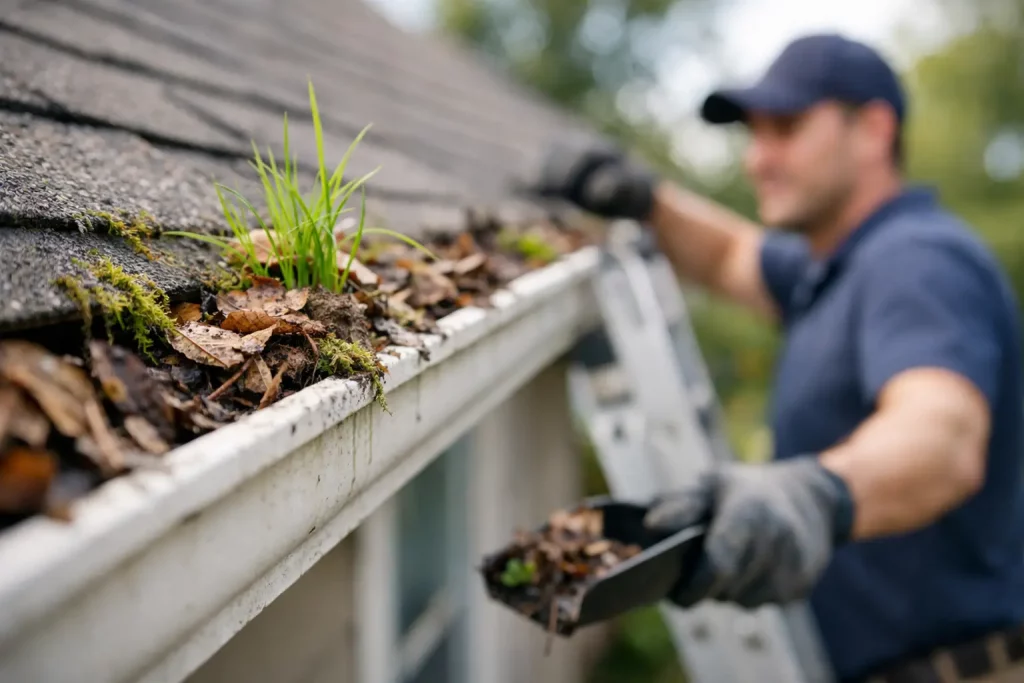
Plant growth is an even stronger signal. When seeds settle into damp debris, gutters can turn into narrow planters. Grass, weeds, and small sprouts mean the material has been sitting there long enough to hold moisture and support growth. By then, the clog is well established.
This is especially common after fall leaf drop, but it can happen any time organic buildup is left in place. If there is anything green growing out of your gutter line, cleaning should move up the priority list quickly.
Not every clogged gutter announces itself with a dramatic waterfall. Sometimes the signs are more subtle. You may notice black or brown streaks on the siding, mildew near the roofline, or damp spots that seem to return after rain. These often point to water escaping where it should not.
When gutters cannot carry water away efficiently, runoff can track down the side of the building. Over time, that constant moisture can affect paint, trim, soffits, and exterior finishes. On brick or masonry surfaces, it may leave discoloration that is difficult to remove.
This is one of those situations where appearance and protection go hand in hand. A building that looks streaked or weather-worn may actually be showing early signs of drainage failure. Cleaning the gutters can help stop further staining and reduce the chance of moisture-related deterioration.
Clogged gutters create a damp, sheltered space that attracts pests. Mosquitoes are drawn to standing water. Birds may nest in accumulated debris. Insects, including ants and other moisture-loving pests, can also treat neglected gutters as a safe place to settle.
If you are seeing more pest activity near the roofline or hearing birds frequently around one section of the house, it is worth checking the gutters. The problem may not be inside the home at all. It may be overhead.
For commercial properties, this matters for more than maintenance reasons. Visible nests, insect activity, and dirty overflow areas can affect how tenants, employees, and visitors view the property. Clean gutters help support a more cared-for exterior overall.
Some of the top signs your gutters need cleaning show up far away from the gutters themselves. If water is not being directed out through the downspouts, it often ends up pooling near the base of the building. That can contribute to foundation settlement, basement dampness, or recurring wet spots around the perimeter.
To be clear, not every basement moisture issue starts with clogged gutters. Grading, drainage layout, and foundation conditions all play a role. But blocked gutters are one of the first things worth ruling out because they are a common and preventable source of excess water near the structure.
If you notice puddling near downspouts, washed-out flower beds, or water collecting near walkways after rain, your gutters may not be doing their job. In that case, cleaning is not just about the roof edge. It is about controlling where rainwater goes once it leaves the roof.
In Western Pennsylvania, seasonal shifts can fill gutters quickly. Fall leaves are the obvious culprit, but spring storms and summer tree debris can be just as disruptive. After a windy day or a stretch of heavy rain, it is smart to pay attention to how your gutter system is performing.
You may notice one downspout draining well while another barely trickles. That uneven flow usually means one section is blocked. You might also hear water sloshing overhead after a storm has passed, which suggests standing water is trapped inside instead of draining out.
Winter adds another layer. When debris holds water in the gutter and temperatures drop, ice can form more easily. That extra weight puts more stress on the system and can contribute to separation or damage along the roof edge. In a climate like ours, routine cleaning before winter can prevent avoidable problems later.
Some property owners are comfortable checking lower gutters themselves, especially on a one-story structure. If conditions are safe, a visual inspection from the ground can tell you a lot. But taller homes, steep rooflines, and commercial buildings are a different story.
Gutter cleaning is not just about removing leaves. It also means checking flow through the downspouts, watching for loose sections, and spotting early signs of wear. Safety matters, and so does knowing when a small problem is becoming a repair issue.
That is one reason many homeowners and property managers choose professional service. A dependable crew can clean the system thoroughly, identify trouble spots, and save you the risk and hassle of climbing a ladder. For local properties that already need window cleaning or exterior upkeep, it often makes sense to handle those services together.
A Clearvue works with homeowners and commercial clients across the Pittsburgh area who want that kind of straightforward, professional help. Fully insured service, clear scheduling, and a trained team matter when you are trusting someone to work on your property.
If your gutters are overflowing, sagging, showing visible buildup, or leaving water where it should not be, waiting usually does not improve the situation. A quick inspection and timely cleaning can protect the appearance of your property and help prevent more expensive repairs. If something looks off, it is worth getting a free estimate before the next hard rain makes the problem easier to see.



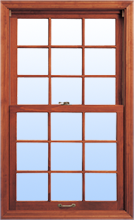
* Suspended Grids / False Grids – the grids are between your panes of glass.



* Fixed / non-removable grids – These are windows with non-removable obstructions making the window look and feel like individual pieces of glass.