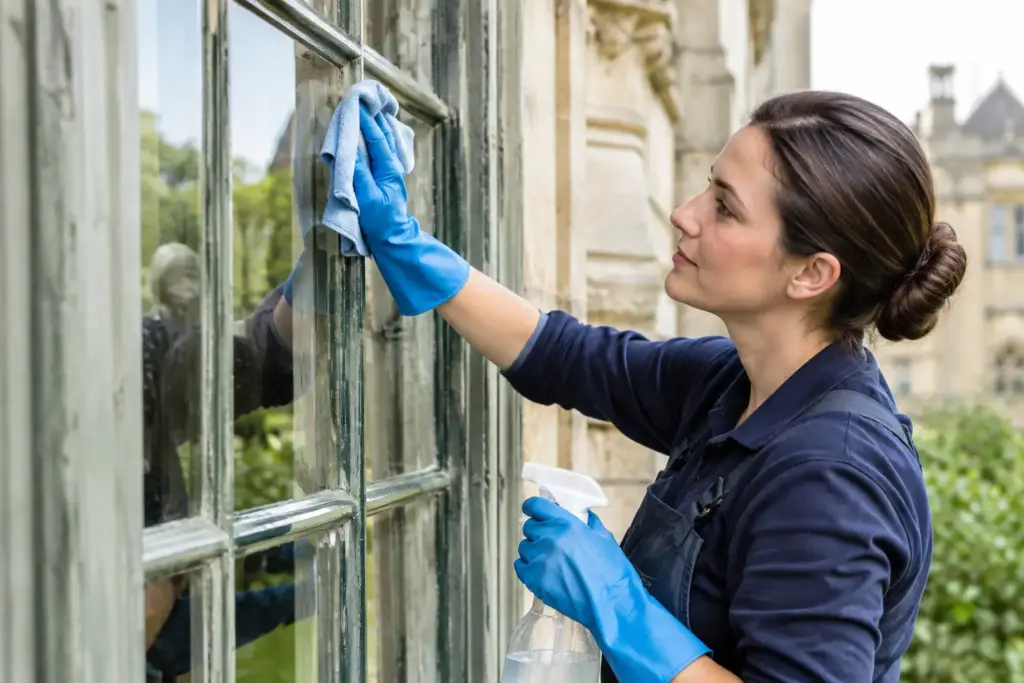
Old windows carry more than daylight. Their wavy glass, original sash, aged hardware, and hand-built details often tell the story of a home or commercial property. This guide to cleaning historic windows explains how to remove dirt and grime without damaging the materials that make those windows worth preserving.
Historic windows need a gentler approach than modern insulated glass units. The goal is not to make every pane look brand new. It is to clean the glass thoroughly, protect the surrounding wood and glazing, and identify small concerns before they become expensive repairs.
Before bringing out water or cleaning solution, inspect the window from inside and out. Look closely at the glass, putty, painted wood, screens, storm windows, and hardware. A little time spent here can prevent moisture from reaching a weak sash or damaged frame.
Pay attention to cracked or loose panes, soft wood, peeling paint, missing glazing compound, and rusted latches or hinges. If a sash rattles in its frame, does not open properly, or has visible gaps around the glass, use minimal moisture until repairs can be made.
Older Pittsburgh-area homes may also have decades of paint layers around their windows. Paint applied before 1978 can contain lead. Do not dry-scrape, sand, or aggressively scrub painted surfaces unless proper lead-safe procedures are in place. Cleaning is one thing; disturbing old paint is another.
The safest cleaning setup is simple: clean water, a small amount of mild dish soap, soft microfiber cloths, a soft natural-bristle brush, and a quality squeegee with clean rubber. A spray bottle is useful because it lets you control the amount of water applied.
Avoid harsh chemical cleaners, abrasive powders, steel wool, razor blades, and stiff brushes. Even though a razor can be used on some modern glass under controlled conditions, historic glass is often uneven, thinner in places, and more vulnerable to scratching. Old panes may have mineral deposits or paint flecks that tempt someone to scrape harder, but force can turn a cleaning job into a replacement project.
Use a lightly damp cloth rather than soaking the window. Excess water can run into failed glazing, open joints, or unprotected wood. On a wood window, standing moisture is rarely a good idea.
For routine dirt, mix a few drops of mild dish soap into a bucket of clean water. Work from the top down, wiping the glass gently before using a squeegee or dry microfiber cloth. Change the water when it becomes cloudy. Dirty water simply moves grit from one pane to the next.
Begin with dry work. Use a soft brush or vacuum with a brush attachment to remove loose dust, cobwebs, and grit from the sill, tracks, and corners. This keeps abrasive particles from becoming a slurry once moisture is introduced.
Then clean one small section at a time. Lightly wet the glass, wipe with a soft cloth, and squeegee from top to bottom using overlapping strokes. Wipe the squeegee blade after each pass. Finish the edges with a dry microfiber cloth to prevent drips from collecting at the glazing or sill.
If you are cleaning divided-light windows with many small panes, skip the large squeegee and use a folded microfiber cloth. These windows require more patience, but they also benefit from precise cleaning that does not flood muntins, putty lines, or wood joints.
Clean interior and exterior surfaces separately, and do not forget storm windows if the property has them. Dirt trapped between a primary window and a storm panel can reduce clarity and hold moisture in place. Before reinstalling a removable storm window, make sure both surfaces and the sill are completely dry.
Historic glass is often not perfectly flat. It may have waves, small bubbles, or slight distortions that create the character many owners want to keep. These are not defects to correct during cleaning.
Do not use abrasive pads to remove spots or haze. Some cloudiness comes from etched glass, weathering, or mineral damage that cannot be washed away. Trying to polish it out can make the appearance worse. If the glass has paint splatter, hardened residue, or heavy mineral staining, consult a window restoration professional before attempting removal.
A small amount of residue may be acceptable when the alternative is damaging original material. This is one of the main trade-offs with historic windows: preservation sometimes matters more than perfect clarity.
Glass may be the most visible part of a window, but wood and glazing compound usually need the most protection. Keep cleaning solution off peeling paint and deteriorated putty whenever possible. Wipe drips from the sill promptly, especially if the finish is worn.
After the glass is clean, use a barely damp cloth to wipe sound painted wood. Follow immediately with a dry cloth. Do not pressure wash old windows, and do not spray a strong stream of water into sash channels, seams, or storm-window tracks. Pressure can force water behind trim and into wall assemblies, where it may go unnoticed.
For metal hardware, dust first and wipe gently with a damp cloth. Rusted hardware should not be forced. A stuck latch, hinge, or pulley may need lubrication or repair, but that work should be separated from basic cleaning. Forcing old hardware can break a part that is difficult to match.
Screens collect pollen, dust, and outdoor debris that can quickly make freshly cleaned glass look dull. Remove them carefully if the frame and tabs are in good condition. Lay the screen flat, brush away loose debris, and rinse it lightly with water. Avoid bending the frame or pushing on fragile mesh.
Storm windows deserve similar care. Their frames can be thin, their clips can be brittle, and their glass may be just as old as the primary window. Label removable panels before taking them down so each one returns to the correct opening. This saves time and prevents frustrating fit issues later.
If exterior access requires working from a ladder, reaching over a roofline, or removing large storm panels, it is generally better to call a professional. The risk rises quickly when fragile materials and elevated work are combined.
Window cleaning often reveals maintenance needs that were hidden by dirt. Stop and arrange repairs if you find loose glass, crumbling putty, active wood rot, significant paint failure, or water coming through the sash. These are not problems that more glass cleaner will solve.
Condensation between panes of an added storm unit can also point to ventilation or sealing concerns. In Western Pennsylvania, seasonal temperature swings and humidity can make minor window weaknesses more noticeable. A professional can help distinguish normal seasonal condensation from a condition that could damage wood over time.
For historic homes, churches, storefronts, and older commercial buildings, professional cleaning can be especially helpful when windows are high, oversized, difficult to access, or part of a preservation-sensitive property. A trained, insured crew can clean carefully while reducing the safety concerns that come with ladders, aging glass, and heavy storm panels.
Most historic windows do better with regular light cleaning than occasional aggressive cleaning. A spring and fall cleaning schedule is often enough for many properties, with additional attention after construction work, heavy pollen, or a particularly dirty season.
Between cleanings, keep sills clear of leaves and debris, check for peeling paint or failed putty, and make sure storm windows drain properly. These small habits help protect both the appearance and service life of older windows.
Historic windows do not need to be treated like museum pieces, but they do deserve patient care. When the job calls for exterior access, delicate materials, or detailed cleaning across a large property, A Clearvue can provide the dependable local service needed to keep original windows looking their best without taking unnecessary risks.



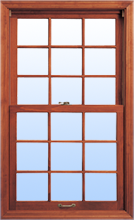
* Suspended Grids / False Grids – the grids are between your panes of glass.
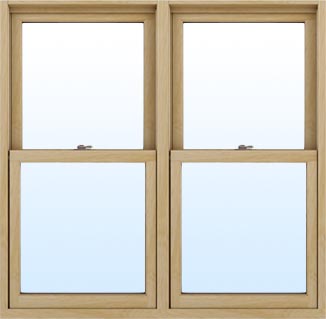
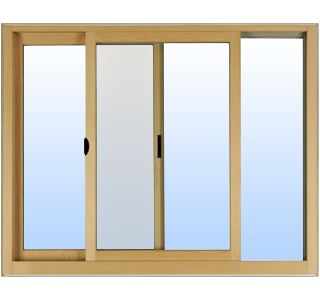


* Fixed / non-removable grids – These are windows with non-removable obstructions making the window look and feel like individual pieces of glass.