
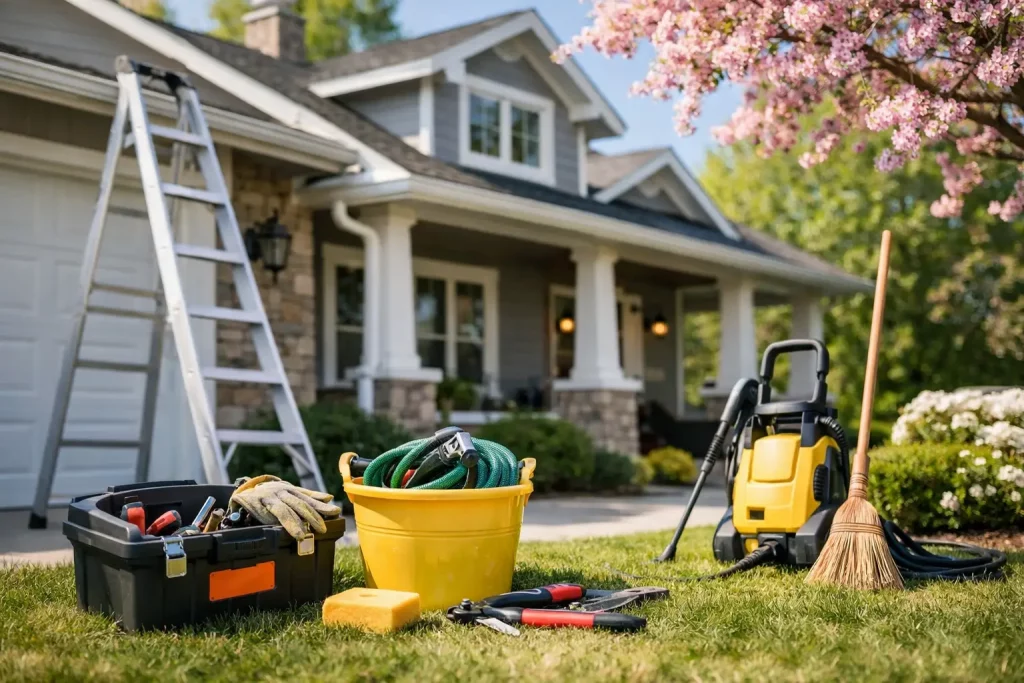
Western Pennsylvania winters are hard on a home’s exterior. By the time the snow clears, it is common to find clogged gutters, dirty windows, loose trim, and small issues that were easy to miss in January. A solid spring exterior home maintenance checklist helps you catch those problems early, protect your investment, and keep your property looking cared for before heavier spring rains and summer heat arrive.
For many homeowners, the challenge is not knowing that exterior maintenance matters. It is knowing where to start, what can wait, and which jobs are better handled by a professional. The right approach is not to do everything at once. It is to walk the property with a clear plan and handle the work in the order that protects the home first.
Start with a full walkaround of the house. This sounds simple, but it is one of the most useful steps because winter damage often shows up in patterns. You may notice soil erosion under a downspout, peeling paint on the weather side of the house, or staining near gutters that overflowed during freeze-thaw cycles.
Look at the roofline, siding, foundation, windows, doors, gutters, walkways, and any exterior wood surfaces. Bring a phone and take photos as you go. That gives you a record of what needs attention and helps you separate urgent repairs from cosmetic cleanup.
In spring, timing matters. Some issues are mostly about appearance, while others can lead to water intrusion, wood rot, or unsafe conditions. If you find loose gutters, cracked caulk around windows, damaged downspouts, or missing shingles, those should move to the top of the list.
If there is one area that causes avoidable exterior damage every spring, it is poor drainage. Gutters collect leaves, seed pods, twigs, and roof grit over the winter. Once they clog, water spills over the sides instead of moving away from the home.
That overflow can stain siding, loosen fascia boards, saturate flower beds, and pool near the foundation. In Western Pennsylvania, where spring rain can be steady and heavy, that is not a small problem. Even a minor clog can create a lot of runoff in the wrong place.
Check that gutters are securely fastened, free of debris, and pitched correctly. Downspouts should discharge water away from the foundation, not directly against it. If you see sagging sections, separated joints, or water marks beneath the gutters, it is worth addressing quickly.
This is also one of the jobs where safety should guide the decision. Single-story gutter cleaning may be manageable for some homeowners, but second-story work, steep grades, and awkward ladder placement increase risk. If you would rather have it handled safely and professionally, this is the kind of seasonal service many local property owners prefer to outsource.
Spring sunlight has a way of showing every streak, spot, and layer of winter buildup on glass. Clean windows improve appearance right away, but they also make it easier to inspect for failed seals, frame damage, and caulking gaps.
As you work through your checklist, inspect the glass, sills, screens, and trim together. Look for cracked panes, torn screens, soft wood, and gaps where moisture could get in. On older homes in the Pittsburgh area, repeated freeze-thaw cycles can open up joints around windows that looked fine in the fall.
Window cleaning is often treated like a cosmetic extra, but it has a practical side. Clean glass helps you spot issues before they turn into repairs. It also improves natural light inside the home, which is one reason many homeowners schedule professional service in the spring.
If your home has high or hard-to-reach windows, it may make sense to combine window cleaning with exterior inspection rather than trying to manage both separately. Companies like A Clearvue often handle that kind of seasonal work for homeowners who want a cleaner look without taking on ladder work themselves.
Siding does not need to be perfect to do its job, but it does need to be intact. Walk the perimeter and look for cracked vinyl panels, loose boards, peeling paint, mildew, and warped trim. Focus especially on the sides of the house that get the most weather exposure.
A gentle wash can remove grime and organic growth, but not every surface should be treated the same way. Pressure that is too high can force water behind siding, damage painted wood, or scar softer materials. It depends on the age of the home, the type of cladding, and the condition of the finish.
Spring is also a good time to inspect exterior wood details like porch railings, soffits, window trim, and entry surrounds. If paint is bubbling or wood feels soft, that may point to moisture getting trapped. Catching it now is usually much less expensive than waiting until summer.
Most homeowners are not climbing onto the roof for a close inspection, and that is reasonable. Still, you can learn a lot from the ground with a careful look. Check for missing or lifted shingles, bent flashing, damaged vents, and debris collected in roof valleys.
Also pay attention to what ends up on the ground. If you see an unusual amount of shingle granules near downspouts or on walkways, it may mean the roof is aging. That does not always require immediate replacement, but it is worth having assessed if the roof is older or if there were strong winter storms.
The goal here is not to diagnose every roofing issue yourself. It is to catch visible warning signs early enough to avoid interior leaks and structural damage.
Spring moisture can reveal drainage and settlement problems around the base of the home. Look for new cracks in the foundation, separated masonry joints, and areas where mulch or soil is piled too high against siding. You want water to move away from the house, not collect at the perimeter.
Driveways, sidewalks, patios, and steps should also be checked after winter. Freeze-thaw cycles can widen small cracks and create uneven sections that become trip hazards. If you manage a commercial property or rental, this deserves extra attention because safety and appearance both matter to tenants and visitors.
Small concrete cracks can often wait for scheduled repair, but loose steps, lifted walkway sections, and failing handrails should not. Those are practical problems, not cosmetic ones.
Front entry areas do a lot of work. They create first impressions, but they also deal with constant traffic, wet shoes, wind, and temperature changes. Check door frames, thresholds, weatherstripping, locks, and caulking. If air or water can work its way in, spring is the time to tighten that up.
Garage doors deserve the same attention. Inspect the trim, bottom seal, and visible hardware. If the door sounds rough or moves unevenly, it may need adjustment or service. For detached garages and utility doors, check for rot at the lower corners where water tends to sit.
These items are easy to overlook because they are familiar. Yet they are often the spots where small maintenance work makes a home feel well cared for.
A good spring exterior home maintenance checklist should include what is touching the house, not just the house itself. Trim back branches rubbing against the roof, siding, or windows. Remove dead limbs that could fall in a storm, and clear plants that trap moisture against foundations or trim.
Landscaping can help drainage or hurt it. Make sure beds slope away from the home and that mulch is not stacked against siding or wood components. If tree litter is a constant issue, you may need more frequent gutter and window service during the spring and fall.
Some exterior maintenance is straightforward. Picking up debris, checking screens, washing lower-level surfaces, and noting cracks or gaps are manageable for many homeowners. Other tasks carry more risk or require a trained eye, especially when ladders, roof edges, or second-story access are involved.
There is no benefit in forcing every job into a DIY weekend. For busy homeowners and property managers, the smarter move is often to handle light ground-level tasks yourself and schedule professional help for gutter cleaning, high window cleaning, and exterior items that raise safety concerns.
A dependable local service company should make that process simple – clear communication, straightforward scheduling, and work performed by insured professionals who respect the property. That matters just as much as the task itself.
Spring maintenance does not need to become a major project. Walk the property, deal with water-related issues first, and take care of the items that protect the home before focusing on appearance. A little attention in April can prevent a much bigger repair in July, and it keeps your home looking the way it should when the season finally turns.



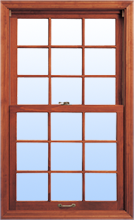
* Suspended Grids / False Grids – the grids are between your panes of glass.



* Fixed / non-removable grids – These are windows with non-removable obstructions making the window look and feel like individual pieces of glass.