
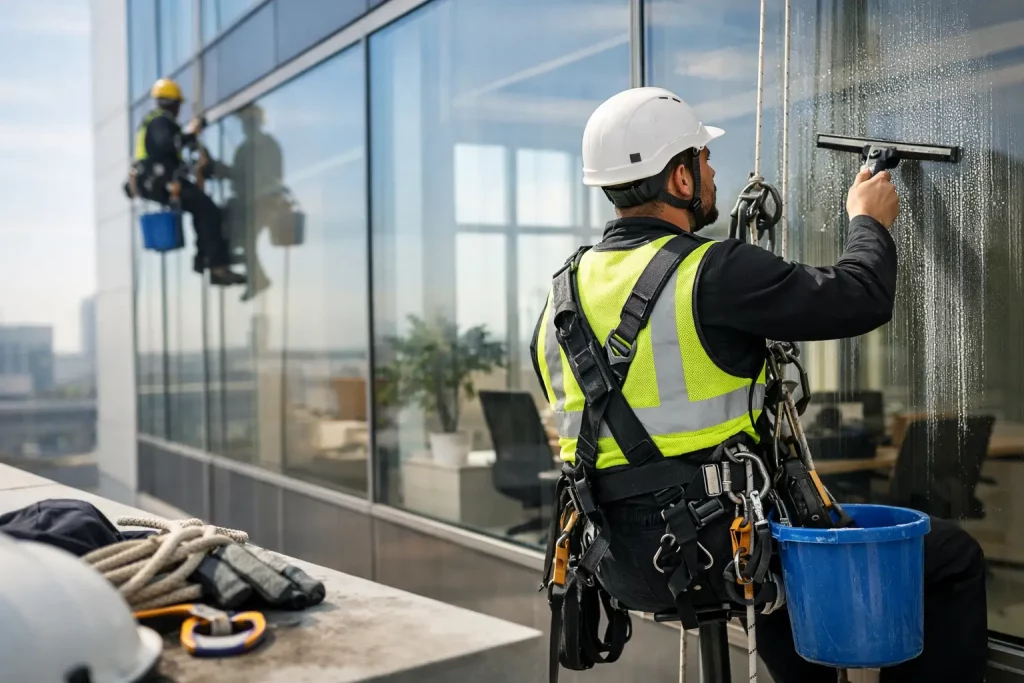
A ladder leaning against a storefront at 8:30 on a rainy Pittsburgh morning is not just a maintenance detail. It is a liability issue, a public safety issue, and in many cases, a sign that the job is not being handled professionally. Window cleaning safety for businesses matters because the work happens around employees, customers, tenants, sidewalks, entryways, and parking areas. One mistake can affect far more than the glass.
For property managers and business owners, clean windows are part of presenting a well-kept building. But safety should come before appearance every time. The right commercial window cleaning plan protects your building, reduces risk, and gives you confidence that the work is being done the right way.
Commercial window cleaning looks simple from the ground. In practice, it involves fall risks, shifting weather, foot traffic, glass hazards, water on walking surfaces, and equipment used around active properties. Even a one-story retail location can create real exposure if work is done carelessly.
That is why professional standards matter. A business should not have to worry about whether a worker is properly trained, whether the crew is insured, or whether the cleaning plan accounts for customer access and building use. Those are basic expectations, not extras.
In busy areas, timing also plays a role. Cleaning windows during peak customer hours may create avoidable problems if hoses cross walkways or ladders block entrances. In office settings, poor coordination can disrupt operations. Safety is not only about preventing injuries. It is also about doing the work in a way that respects how your property functions.
The most obvious risk is working at height. Ladders, extension poles, and elevated access equipment all require proper handling. An uneven surface, a poor ladder angle, or a rushed setup can lead to a fall in seconds. In Western Pennsylvania, changing weather adds another layer. Wet pavement, wind, and cold temperatures can turn a routine visit into a hazardous one.
There is also risk at ground level. Water runoff can create slippery entryways. Buckets, tools, and hoses can become trip hazards. If a technician is working near glass doors or heavily used storefront windows, pedestrian awareness matters just as much as worker awareness.
Then there is the property itself. Older buildings may have delicate frames, aging seals, or hard-to-access architectural details. A crew that does not adjust its methods can damage surfaces while trying to move quickly. Safe work is careful work. It accounts for the condition of the building, not just the need to finish the route.
A small office building and a medical facility do not have the same traffic patterns. A restaurant with sidewalk access has different concerns than a warehouse with limited public contact. That is why a one-size-fits-all approach rarely works.
For storefronts, public access is usually the main concern. For multi-tenant properties, scheduling and communication matter more because multiple businesses may be affected at once. For residential communities or mixed-use spaces, privacy and tenant awareness may need to be factored into the work plan.
A legitimate provider should arrive with more than tools and a work order. They should have a clear process for reducing risk before the first window is touched. That starts with reviewing access points, identifying hazards, and planning around the activity level of the property.
Insurance and licensing should never be an afterthought. If a company cannot clearly explain its coverage, that is a concern. Businesses need protection not just from poor workmanship, but from the financial exposure that can come with accidents or damage.
Training is another major factor. Commercial crews should know how to handle ladders correctly, secure work areas, use the right cleaning methods for different surfaces, and adapt to changing site conditions. Professionalism shows up in small decisions, like repositioning equipment rather than overreaching, or pausing work when conditions are no longer safe.
Background-checked employees can also matter, especially for offices, healthcare spaces, schools, and properties with controlled access. Trust is part of safety. Building owners and managers should know who is on site and feel comfortable with the people performing the work.
You can usually tell a lot before the service begins. A professional company asks questions about access, business hours, special concerns, and site conditions. They do not treat every property the same. They explain how they will handle the job, where they may need clear space, and whether weather could affect scheduling.
On site, crews who prioritize safety tend to be organized and deliberate. Equipment is placed carefully. Entry points stay as clear as possible. The team works with awareness of both the building and the people using it. That kind of discipline is often what separates dependable service from cheap service.
Safety is shared. The cleaning company carries the technical responsibility, but the property owner or manager can help the work go smoothly. Good communication ahead of time prevents many common problems.
If there are known issues with access, pavement condition, locked gates, sensitive landscaping, or high-traffic periods, mention them during scheduling. If certain entrances should stay open or certain tenant areas should be avoided at specific hours, that should be discussed before arrival. The more a crew knows, the better they can plan.
It also helps to think about timing. Early morning may work well for some storefronts, while office complexes may need service outside of arrival and lunch rushes. In some cases, dividing service into sections is safer than trying to complete the whole property at once during a busy window.
A business owner does not need to be an expert in window cleaning to ask the right questions. Ask whether the company is insured and licensed. Ask how they handle active customer areas. Ask what happens if weather changes during the appointment. Ask whether the crew members are employees or unknown subcontractors.
You can also ask how they approach difficult access points or multi-story work. A trustworthy company should answer clearly, without vague promises or pressure. If the response feels rushed, that often carries over to the work itself.
Some businesses treat cleaning as a cosmetic task and safety as a separate issue. In reality, the two are closely connected. A company that protects your walkways, respects your hours, and works carefully around your property is usually the same kind of company that delivers consistent results.
Clean glass reflects well on a business. So does orderly service. Customers notice when maintenance is handled professionally. Tenants notice too. They may not know the details of ladder setup or jobsite control, but they can tell when work feels organized instead of disruptive.
For many commercial properties, regular service is safer than occasional rushed service. Dirt buildup can make the job more difficult, and long gaps may encourage last-minute scheduling before inspections, showings, or events. A steady maintenance plan supports both appearance and safer working conditions because the service becomes predictable and manageable.
For businesses in the Pittsburgh area, local accountability matters. A company that works in your community has more reason to protect its reputation and more familiarity with local conditions. That includes everything from steep approaches and older buildings to weather patterns that can affect scheduling and safety decisions.
A Clearvue serves commercial properties with the kind of dependable, insured service that business owners and property managers should expect. That means straightforward communication, professional crews, and a practical approach that puts safety first while keeping the property looking its best.
The lowest quote is not always the lowest risk. When you hire a commercial window cleaning company, you are trusting them to work around your staff, your visitors, and your building without creating unnecessary exposure. That trust should be earned through professionalism, not assumed.
If your current provider leaves you guessing about insurance, scheduling, or site protection, it may be time to ask harder questions. Clean windows should improve your property, not add uncertainty to it. A good service partner leaves the glass clear and the process just as well managed.




* Suspended Grids / False Grids – the grids are between your panes of glass.




* Fixed / non-removable grids – These are windows with non-removable obstructions making the window look and feel like individual pieces of glass.