Window tracks usually get ignored until they are packed with dirt, dead bugs, pollen, and that black grime that shows up in corners. A good window track cleaning guide helps you deal with the mess before it affects how your windows look, smell, and slide. For homeowners and property managers in Western Pennsylvania, where rain, wind, and seasonal debris can build up fast, keeping tracks clean is a simple way to protect both appearance and function.
Window tracks collect more than loose dust. They catch moisture, outdoor debris, pet hair, cooking residue, and fine particles that settle over time. In older homes or busy commercial spaces, that buildup can become sticky and compacted, especially when windows are opened often.
Pittsburgh-area weather does not help. Pollen in spring, humidity in summer, falling leaves in autumn, and winter grime can all work their way into the channels. Once that material gets wet and dries again, it tends to harden along the edges and around weep holes, making basic wiping less effective.
That is why window tracks often need more than a quick pass with a paper towel. If the goal is a cleaner look and smoother operation, the cleaning method matters.
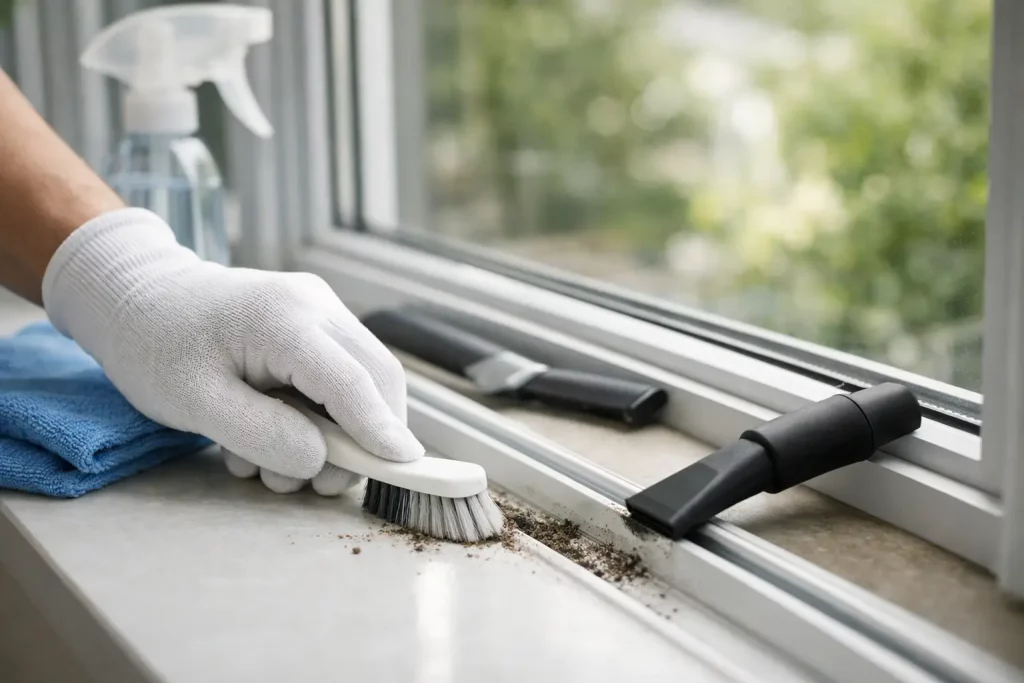
You do not need a garage full of tools, but the right setup makes the work faster and less frustrating. In most cases, a vacuum with a hose attachment, a soft brush, microfiber cloths, cotton swabs, a spray bottle, and a small bucket are enough. A plastic putty knife or an old toothbrush can also help loosen grime without scratching the surface.
For the cleaning solution, warm water with a small amount of dish soap works well for routine buildup. If the tracks have grease, mildew staining, or stubborn residue, you may need a stronger but still surface-safe cleaner. That depends on the window material. Vinyl tracks are generally forgiving, while older painted or aluminum surfaces may need a gentler approach.
If you are cleaning interior tracks only, keep towels nearby to catch drips. If you are dealing with large commercial windows or second-story units, access and safety become part of the job. That is often where professional service makes more sense than a do-it-yourself approach.
One of the biggest mistakes people make is spraying dirty tracks right away. That usually turns dry debris into muddy sludge and pushes grime deeper into corners.
Start by opening the window fully and vacuuming out as much loose material as possible. Use a narrow attachment to reach the corners, edges, and drainage areas. If dirt is packed in, loosen it first with a dry brush or toothbrush, then vacuum again.
This step matters because it removes the top layer without smearing it across the track. It also gives you a better look at what is left behind, whether that is ordinary grime, mold spots, rust marks, or damage.
After the dry debris is gone, lightly apply your cleaning solution to the track. The key word is lightly. You want enough moisture to loosen residue, not so much that liquid pools into the frame or surrounding wall.
Let the cleaner sit for a minute or two, then scrub gently with a soft brush or toothbrush. Work along the full length of the track, paying attention to corners and the raised areas where debris often sticks. A plastic putty knife wrapped in a microfiber cloth can help lift grime from tight grooves.
Wipe the area with a damp cloth, then follow with a dry microfiber towel. Cotton swabs are useful for small crevices, latch areas, and narrow corners where cloths cannot reach. If the track is still dirty after one pass, repeat the process rather than scrubbing aggressively.
That is especially important with vinyl and painted surfaces. Hard scraping can leave marks, and overly strong chemicals can dull the finish. Clean windows should look better when you are done, not just cleaner in one small section.
A complete window track cleaning guide should include the parts most people miss. Weep holes are small openings designed to let water drain out of the window system. When they get clogged, moisture can stay trapped in the track, which can lead to odor, staining, or in some cases water issues around the frame.
Check for these drainage openings and make sure they are clear. A cotton swab, small soft brush, or careful vacuuming can help remove blockage. You do not want to jam debris farther in.
Also check rollers, guides, and sliding contact points if your windows have them. Dirt buildup here can make a window feel heavy or uneven. Cleaning can improve movement, but if the window still sticks after the tracks are clean, the issue may be worn hardware rather than dirt alone.
For many homes, window tracks benefit from light cleaning every few months and a deeper cleaning during spring or fall. That schedule helps keep buildup manageable, especially if windows are opened often or face busy streets, trees, or heavy weather exposure.
But sometimes the condition of the tracks points to a larger issue. If you notice mold that keeps returning, signs of water intrusion, damaged seals, bent tracks, or windows that will not slide properly even after cleaning, the job may go beyond maintenance. In a commercial property, recurring grime can also be a sign that windows are not being serviced often enough for the building’s traffic and exposure.
This is where a practical trade-off comes in. Doing it yourself can save money on a small number of easily reached windows. On the other hand, large properties, older windows, high access points, or heavily compacted tracks often take more time than expected and can be difficult to clean thoroughly without the right tools and experience.
Even spotless glass can look unfinished when the tracks are dirty. It is one of those details people notice without always knowing why the window still seems unclean. In homes, that can affect the look of the room and the overall impression of how well the property is maintained. In storefronts, offices, and managed buildings, it can undercut an otherwise professional appearance.
Clean tracks also support better window performance. They help reduce drag when opening and closing, lower the chance of debris grinding into moving parts, and make it easier to spot maintenance issues before they turn into bigger repairs.
For property owners who already schedule regular glass cleaning, adding track attention to the routine can make the results feel complete. That is often the difference between windows that are simply less dirty and windows that actually look cared for.
There is a point where track cleaning becomes less about household upkeep and more about service quality, time, and safety. If you are managing multiple units, preparing a home for sale, maintaining a commercial property, or just tired of chasing grime from corner to corner, professional help can be the more efficient option.
A trained team can usually spot problems that are easy to miss during casual cleaning, including drainage issues, damaged screens, failing seals, or buildup patterns that point to moisture trouble. That kind of attention matters when you want more than a quick cosmetic fix.
For local property owners, working with an insured and dependable company also brings peace of mind. A Clearvue serves homeowners and commercial clients across the Pittsburgh region with the kind of straightforward scheduling and professional care that makes routine property maintenance easier to keep up with.
A little prevention goes a long way. If you wipe tracks down periodically before debris becomes compacted, deep cleaning gets much easier. Keeping nearby sills and screens clean also helps reduce what settles into the track in the first place.
During high-pollen months or after storms, a quick vacuum pass can keep buildup from turning into sticky grime. If a window is rarely opened, check it anyway. Closed windows still collect dust and moisture, and neglected tracks tend to be the ones that need the most work later.
Window tracks are small, but they affect how the whole window system looks and functions. When you stay ahead of the buildup, your windows move better, look better, and send the right message about how the property is cared for. If the job is larger than you want to handle, getting a free estimate is often the easiest next step.




* Suspended Grids / False Grids – the grids are between your panes of glass.



* Fixed / non-removable grids – These are windows with non-removable obstructions making the window look and feel like individual pieces of glass.