
A window can look fine from across the yard or parking lot, then show every spot, streak, and mineral stain the minute the sun hits it. In Western Pennsylvania, that happens fast. This guide to protecting windows from buildup is meant for homeowners, property managers, and business owners who want glass that stays cleaner longer and avoids the kind of residue that becomes harder and more expensive to remove over time.
Window buildup is not just a cosmetic issue. Dirt, pollen, hard water minerals, oxidation from screens, and runoff from frames can all cling to glass and surrounding surfaces. Left alone, that residue can etch glass, stain tracks, and make routine cleaning less effective. The good news is that most buildup problems are manageable when you catch the cause early and stay consistent.
Most window buildup starts with a combination of moisture and airborne debris. Rain does not usually make windows dirty by itself. The problem is what the rain picks up on the way down, including dust, pollen, roofing grit, and residue from siding or gutters. Once that mix dries on the glass, it leaves behind a film that attracts even more grime.
Hard water is another common issue. If your sprinklers hit the windows or if runoff repeatedly drips from one point, mineral deposits can form in layers. At first, these spots may seem minor. Over time, they can bake onto the glass, especially on windows with direct afternoon sun.
Commercial properties often deal with a slightly different mix. Traffic exhaust, grease in restaurant areas, fingerprints near entry doors, and urban dust can create a dull film that does not rinse away easily. Residential properties may see more pollen, tree sap mist, insect debris, and screen residue. Different sources, same result – windows that lose clarity and become harder to maintain.
The best approach is prevention, not occasional rescue cleaning. If windows are only addressed once they look obviously dirty, buildup has usually had time to settle into the glass, frame edges, and tracks.
Start with water control. If sprinklers are hitting your windows, adjust them. This one fix prevents a large percentage of hard water spotting. If gutters are overflowing or dripping at corners, address that too. Water that repeatedly runs over glass from above often carries dirt and shingle grit with it.
Next, look at what surrounds the window. Dirty screens, clogged tracks, and oxidizing frames can all transfer residue back onto clean glass. Many people clean the pane and stop there, then wonder why the window still looks hazy a week later. A more complete cleaning process matters because the surrounding components often cause the film that keeps returning.
Timing also makes a difference. Cleaning in the middle of a hot, sunny afternoon can cause water and solution to dry too quickly, leaving marks behind. Early morning or cooler parts of the day are usually better for maintenance. If your property sits near trees, construction, or a busy road, your cleaning schedule may need to be more frequent than a similar building a few miles away.
Routine care does not have to be complicated, but it should be deliberate. For most homes, exterior windows benefit from regular professional attention, especially after winter and again during high-pollen seasons. Commercial properties with customer-facing glass may need a tighter schedule because first impressions change quickly when entry glass looks cloudy.
Inside glass needs attention too, though the buildup is different. Interior haze often comes from dust, cooking residue, smoke, and contact from hands or pets. It is usually easier to remove than exterior buildup, but if ignored long enough it still affects appearance and light.
The key is staying ahead of the problem. Light buildup can often be cleaned safely and completely. Heavy mineral staining or etched glass is where things become less predictable. Sometimes restoration is possible. Sometimes the damage is permanent. That is why regular maintenance is almost always the better value.
Many buildup problems start in places people do not notice during quick cleanings. Lower corners of the glass collect runoff. Tracks trap dirt and hold moisture. Screens gather pollen and fine debris, then transfer it back every time wind or rain moves through them.
Second-story and hard-to-reach windows are another common weak spot. They tend to go longer between cleanings, which gives buildup more time to settle in. On commercial buildings, upper panes and side glass near dumpsters, drive lanes, or landscaping can age differently from front entry glass. If you only focus on the most visible windows, the less visible ones often become the source of recurring residue and drainage marks.
Frames matter as well. Vinyl, aluminum, and painted surfaces all respond differently to weather and cleaning methods. Strong chemicals or abrasive tools can create more problems than they solve. What removes grime from one surface may damage another, so the safest method depends on the material and the condition of the window.
In this region, the seasons work against clean glass in different ways. Spring brings pollen, seed debris, and frequent rain that turns airborne dust into a sticky film. Summer adds sprinkler spotting, insect residue, and faster drying conditions that can leave marks if windows are cleaned at the wrong time.
Fall often brings leaf debris, extra moisture, and clogged gutters that overflow onto windows and siding. Winter is its own issue. Salt spray, slush residue, and repeated freeze-thaw cycles can leave windows looking dull even when there has not been a major storm.
That means a once-a-year cleaning is often not enough for properties that want consistent results. A seasonal approach usually works better. It keeps buildup from compounding and helps catch issues like leaky gutters or drainage patterns before they affect the glass long term.
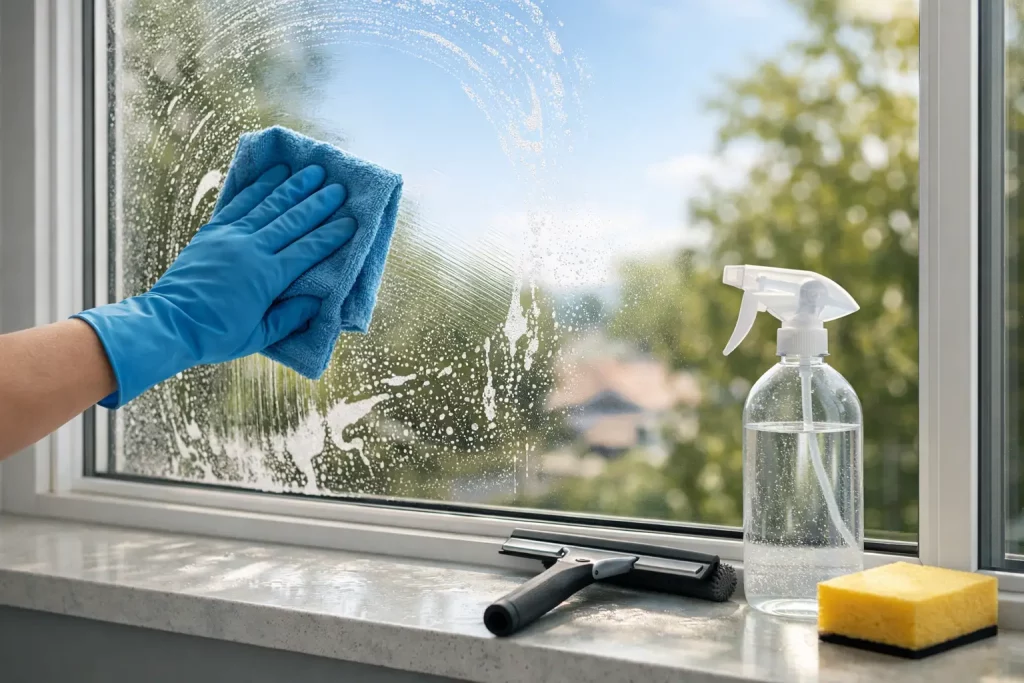
There is nothing wrong with basic upkeep if the windows are accessible and the buildup is light. Wiping interior glass, rinsing off a recently spotted pane, or clearing obvious debris from tracks can all help. Small preventive steps make a difference.
Where DIY tends to fall short is on safety, consistency, and stain removal. Hard water deposits, high windows, large commercial storefronts, and multi-pane homes require more time and more care than most people expect. The risk is not just streaks. Using the wrong tools can scratch glass, damage seals, or leave residue behind that gets worse in the next rain.
Professional service is especially useful when the issue is recurring and you are not sure why. Sometimes the real problem is not the glass at all. It may be a screen condition, a drainage issue, or dirty gutters pushing runoff where it should not go. A trained crew can usually spot those patterns quickly.
For local property owners, that is where a dependable company like A Clearvue adds value. The goal is not only to clean what is dirty today, but to help prevent the same buildup from returning next week.
If your windows look cloudy even after cleaning, if you see white spotting that does not wipe off easily, or if runoff lines keep returning in the same place, do not wait too long. Those are signs that residue is building beyond the surface level. You may also notice that screens look dusty almost immediately or that tracks stay damp and grimy after rain.
Commercial properties should pay attention to customer-facing glass that no longer looks clear from the sidewalk or parking area. Homes often show the problem first when direct sunlight exposes haze in the morning or late afternoon. The sooner buildup is addressed, the better the result tends to be.
Protecting windows from buildup is really about protecting the look and condition of the property. Clean glass sharpens curb appeal, improves natural light, and supports the impression your home or building gives off every day. More importantly, it reduces the chance that common residue turns into lasting damage.
If you stay ahead of water spotting, seasonal grime, and neglected frames or tracks, your windows stay easier to maintain and more consistent year-round. And if the buildup keeps coming back, it is usually a sign that the property needs a more complete solution, not just another quick wipe. A clear window should not be a short-lived result.




* Suspended Grids / False Grids – the grids are between your panes of glass.

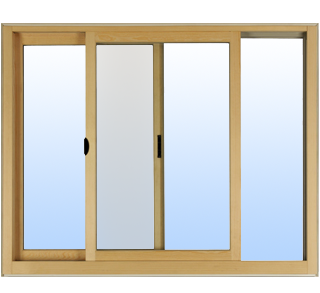


* Fixed / non-removable grids – These are windows with non-removable obstructions making the window look and feel like individual pieces of glass.