
A streaky picture window is easy to ignore until the sun hits it at the wrong angle. Then every smudge, water spot, and missed corner shows up at once. A solid house window cleaning checklist helps you stay organized, avoid damage, and decide which jobs make sense to handle yourself and which are better left to a professional team.
For many homeowners in Pittsburgh and across Western Pennsylvania, window cleaning is not just about appearance. It is also about preserving glass, keeping screens and sills in better shape, and maintaining the overall look of the property. If you manage a larger home, a multi-story building, or windows that are hard to reach, having a clear plan matters even more.
Before any glass gets sprayed, take a minute to assess the job. The first question is access. Ground-level windows with clear footing are one thing. Second-story windows over landscaping, sloped ground, or concrete walks are another. If ladders are involved, the risk changes quickly.
Next, look at the condition of the windows. Light dust and fingerprints usually clean up easily. Built-up grime, mineral deposits, paint specks, oxidized frames, or neglected tracks take more time and a gentler approach. Rushing through heavily soiled windows often creates more smearing instead of a clean finish.
You will also want to check the weather. A mild, cloudy day is usually best. Direct sun can dry cleaning solution too fast and leave streaks behind. Wind can blow dirt right back onto wet glass. Freezing temperatures create their own problems, especially on exterior surfaces.
Before you begin, make sure you have the basics ready: a soft brush or vacuum for dust, microfiber cloths, a quality squeegee, a bucket, a gentle window cleaning solution, and a safe way to reach the area if needed. If your home has removable screens, set aside a clean spot where they can dry fully before going back in.
Interior glass usually looks simpler, but the order still matters. Start by removing dust from the frame, sill, and track area. If you spray cleaner onto dusty surfaces too soon, you turn loose debris into mud and make more work for yourself.
After dry debris is removed, wipe down the frame and sill with a damp cloth. Pay attention to corners where grime collects. Tracks may need a small brush or vacuum attachment, especially in older windows where dirt settles deep into the channel.
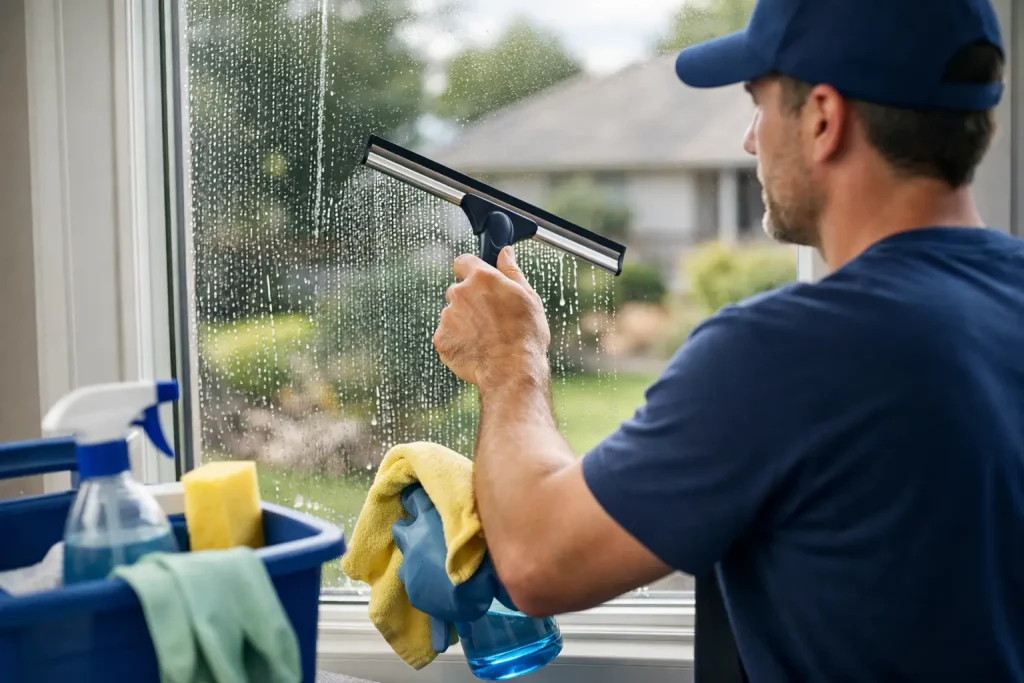
Then move to the glass itself. Apply a modest amount of cleaner rather than soaking the pane. Too much solution often causes drips onto wood, drywall, or trim. Wipe or squeegee in consistent passes, and finish the edges with a clean microfiber cloth.
One common mistake is using paper towels on every window. They can work in a pinch, but they often leave lint and do not remove residue as cleanly as microfiber or professional-grade tools. On large panes, a squeegee usually produces a better finish with less effort.
Exterior cleaning is where condition, access, and safety all start to matter more. Dirt on the outside is usually heavier and may include pollen, road dust, spider webs, bird droppings, and hard water residue. In some neighborhoods, nearby trees and seasonal moisture can add another layer of buildup.
Start with a visual inspection. Look for cracked glass, loose trim, damaged screens, failing sealant, or signs that a window may not be shutting properly. Cleaning does not fix those issues, but spotting them early can help prevent more expensive repairs later.
Brush away loose debris first, especially around the top edge of the frame and sill. Then clean the glass with a method that matches the condition of the window. Routine dirt usually responds well to a standard solution and squeegee. Stubborn spots may need a second pass and more patience, not harsher chemicals.
Be careful with abrasive tools. They can scratch glass, damage coatings, and mark frames. The same goes for pressure washing too close to windows. High pressure can force water where it does not belong and may damage seals, screens, and trim.
Clean glass still looks unfinished if the surrounding parts of the window are dirty. Screens hold dust, pollen, and spider webs, and that buildup can move right back onto freshly cleaned glass.
If your screens are removable, take them out carefully and brush or rinse them with low-pressure water. Let them dry completely before reinstalling. Wet screens can trap dirt and create a musty smell if they go back in too soon.
Sills and tracks deserve attention too. On residential windows, these areas collect dead insects, dirt, and moisture over time. If they are ignored, drainage can become less effective and the whole window can look neglected even when the glass is clear.
For commercial properties, this detail matters just as much. Customers notice entry glass first, but they also notice dirty corners, grime in tracks, and neglected frames. A polished appearance comes from the full window area, not the pane alone.
There is a point where a checklist should tell you to stop and call a professional. That point is usually not about effort. It is about risk.
If windows require climbing onto a roof, reaching over landscaping, working from an extension ladder, or cleaning above a hard surface, safety should come first. The same applies if you have oversized panes, storm windows, fragile older windows, or glass that has not been cleaned in a long time.
The trade-off is simple. Doing it yourself may save money on a small, manageable job. But on larger homes or difficult access points, the margin for error gets smaller. A missed step can mean scratched glass, water damage, broken screens, or an injury.
That is why many homeowners prefer to bring in an insured, professional crew for exterior work or whole-house service. It removes the guesswork, shortens the time commitment, and often produces a noticeably cleaner result.
It depends on the property and the surrounding environment. Homes near busy roads, construction, trees, or heavy seasonal pollen usually need more frequent attention. Properties with large front-facing windows may also benefit from a more regular schedule simply because buildup is easier to see.
Many homeowners do well with a thorough cleaning once or twice a year. Others prefer seasonal service, especially in spring and fall. Commercial properties often need more frequent cleaning to maintain a professional appearance for customers and tenants.
If you are unsure, look at the windows that get the most sun and the most visibility from the street. Those often tell you when it is time.
Some windows look dirty. Others signal a job that is becoming harder to manage properly. If you notice persistent streaking, cloudy buildup, heavy debris in tracks, or exterior windows you have been putting off because they are difficult to reach, it may be time to hand it off.
The same is true if you are preparing for a home sale, hosting guests, opening a storefront, or trying to improve curb appeal without taking on another weekend project. Professional service is often less about luxury and more about saving time while protecting the property.
In Western Pennsylvania, changing weather can also compress the window cleaning season. When conditions are right, it helps to have a dependable company that can assess the property, provide a clear estimate, and handle the work safely. That is where a local provider like A Clearvue can make the process more straightforward for homeowners and property managers who want the job done right.
A good house window cleaning checklist is not complicated. Check access, assess buildup, clean in the right order, and know where your safety limit is. If the windows are easy to reach and lightly soiled, a careful DIY approach can work well. If the job is larger, higher, or more involved, professional service is usually the better value.
Clean windows change how a property looks and feels right away. They brighten interior spaces, improve curb appeal, and give the whole home or building a better-kept appearance. If your windows have been on the to-do list longer than they should be, this is a good time to make a plan and take care of them properly.



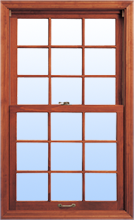
* Suspended Grids / False Grids – the grids are between your panes of glass.
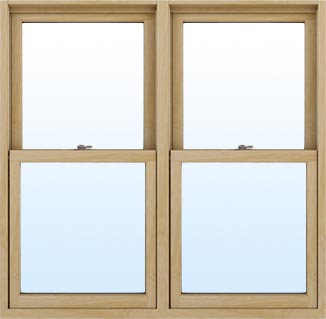
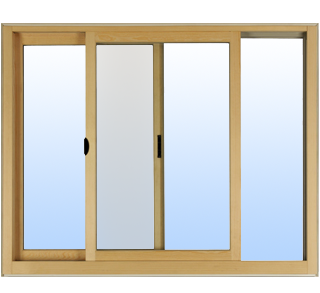
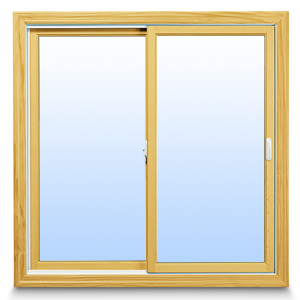

* Fixed / non-removable grids – These are windows with non-removable obstructions making the window look and feel like individual pieces of glass.