
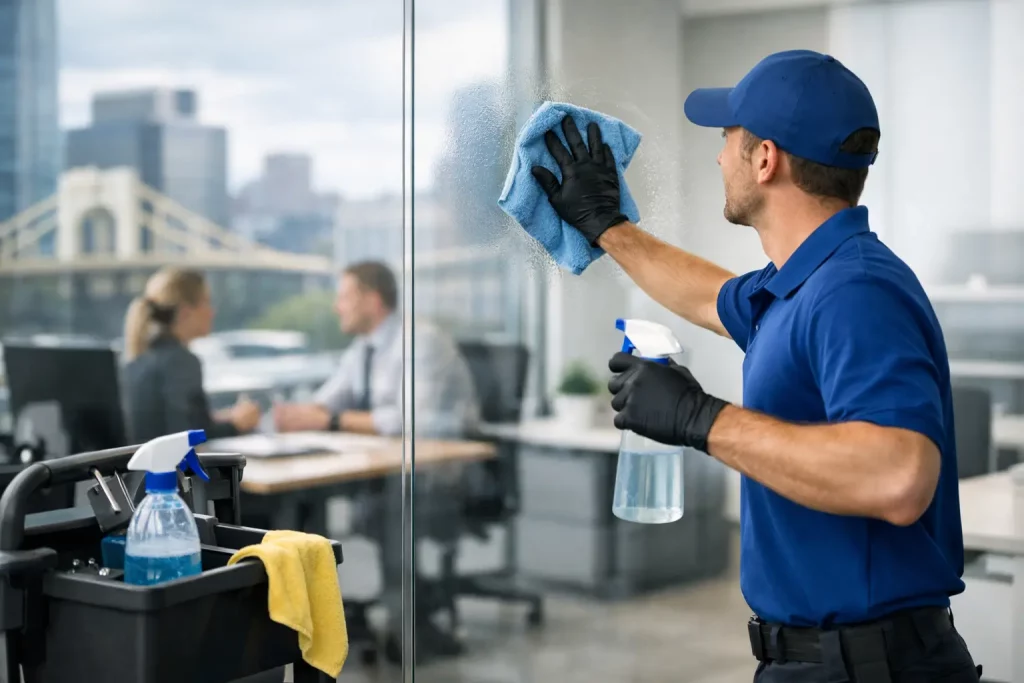
A smudged glass entry door, dusty interior partition, or streaked lobby window can make an otherwise well-kept office feel neglected. This office glass cleaning checklist helps Pittsburgh-area office managers and property teams set a clear routine for the glass surfaces employees, visitors, and tenants see every day.
The goal is not to turn your staff into window-cleaning specialists. It is to identify what can be handled safely through regular housekeeping, what needs attention before it becomes a noticeable problem, and when to schedule an insured professional crew for a complete result.
Glass has different cleaning needs depending on where it is used. A high-touch conference room door may need attention several times a week, while an upper-floor exterior window may only require a professional cleaning on a scheduled basis. Walk the property and separate glass into practical areas before assigning tasks.
The front entrance sets the tone before a visitor reaches reception. Check both sides of entry doors for fingerprints, handprints, water spots, tape residue, and smudges around handles. Look at the glass from inside and outside, since glare can hide marks from one direction.
Clean the handles, metal frames, thresholds, and door closers while you are there. A spotless pane surrounded by dusty frames or fingerprints on the pull handle does not create the polished impression most offices want.
Interior glass often collects fingerprints, dust, and marks from chairs, bags, or carts. Conference rooms, executive offices, reception areas, and glass-walled workspaces deserve the most frequent attention because they are highly visible.
Check lower sections carefully. They are more likely to show marks from shoes, rolling equipment, and small children when clients bring family members to the office. Also inspect edges and corners, where cleaning solution and dust can build up.
Exterior glass faces a different set of problems: pollen, road dust, construction residue, bird droppings, mineral deposits, and weather exposure. In Western Pennsylvania, changing seasons can make windows look dull quickly, particularly after winter grime, spring pollen, or heavy rain.
Ground-level windows may be manageable for trained staff with the right equipment. Upper-level or difficult-to-reach glass should be left to a licensed and insured window cleaning company. Ladders, uneven ground, wet surfaces, and traffic near the building introduce risks that are not worth taking for routine maintenance.
A short visual inspection prevents small marks from becoming a larger presentation issue. Reception staff, janitorial teams, or a designated facilities employee can handle this check during normal opening or closing routines.
Use this working checklist for visible, accessible glass:
Avoid using paper towels for routine glass work when possible. They can leave lint behind and may create visible streaks, especially under bright lobby lighting. A clean microfiber cloth and a glass-safe cleaner are usually a better choice for quick touch-ups.
Use a separate cloth for frames and another for glass. That simple step helps keep dirt from tracks, ledges, and metal trim from transferring back onto the pane.
Good results depend as much on preparation as the cleaner itself. Cleaning a dirty window with the wrong cloth or too much solution often creates more streaks than it removes.
First, identify the glass type. Standard office windows, tempered glass doors, tinted panes, decorative film, mirrored panels, and glass with privacy coatings may have different manufacturer recommendations. When in doubt, test a small, inconspicuous section before treating the entire surface.
Remove loose dust with a dry microfiber cloth or soft brush before applying cleaner. This is especially useful on interior partitions and window frames. Rubbing wet cleaner over grit can leave fine scratches over time.
Use a modest amount of ammonia-free, glass-safe cleaner, particularly around tinted glass, window film, painted trim, and sensitive finishes. Do not soak the pane. Excess liquid can run into frames, tracks, electrical components near doors, or flooring below.
For larger interior panes, work from top to bottom in overlapping sections. Wipe or squeegee in a consistent pattern, then dry the edges with a clean microfiber cloth. If streaks remain, the problem may be too much product, a dirty cloth, or glass being cleaned in direct sunlight.
Once a month, take a more deliberate look at the office glass and its surrounding components. This inspection is useful for property managers overseeing multiple suites, storefronts, or common areas.
Check window tracks for dirt, insects, leaves, and standing moisture. Examine frames for peeling paint, deteriorating caulk, loose weatherstripping, and drainage concerns. On entry doors, make sure decals remain readable and safety markings are still in place.
Look beyond appearance as well. Condensation between double-pane windows can signal a failed seal. Persistent cloudy spots may be mineral deposits or surface damage rather than ordinary dirt. Cracks, chips near edges, and damaged hardware should be documented and addressed promptly.
A cleaning checklist should support maintenance, not cover up a building issue. Repeatedly cleaning a stain that returns after every rain may point to drainage, seal, or exterior runoff problems that need a different repair.
Regular touch-ups keep an office presentable, but they do not replace a detailed professional cleaning. Professional service is particularly valuable for exterior windows, elevated glass, large lobby panes, storefronts, hard-water staining, and glass that has been neglected through several seasons.
The right frequency depends on the property. A busy storefront or medical office near a high-traffic road may benefit from more frequent cleaning than a small office set back from the street. Buildings surrounded by trees may need extra service after pollen season and fall leaf drop. A tenant-facing office with glass conference rooms may prioritize interior partitions more often than a warehouse office with limited visitor traffic.
When comparing providers, ask about insurance, employee screening, access methods, and the scope of the service. A complete visit may include glass, frames, sills, tracks, doors, and accessible interior partitions, but it is best to confirm exactly what is included before scheduling.
For Pittsburgh offices that want dependable scheduling and a clean, professional finish, A Clearvue provides commercial window cleaning with the local accountability property teams expect. A free estimate can help match the service plan to your building, access needs, and appearance standards.
Glass cleaning should never create a slip, fall, or security risk. Keep cleaning supplies out of public walkways, place wet-floor signs where needed, and avoid cleaning doors during heavy visitor traffic. Never stand on office furniture, counters, rolling chairs, or makeshift platforms to reach glass.
Staff should also avoid scraping glass with blades unless they have been trained and the glass manufacturer permits it. A scraper can remove paint or adhesive, but it can also scratch tempered glass, damage film, or create permanent marks when used incorrectly.
For exterior work, high panes, skylights, or glass above stairs and landscaping, professional equipment and trained technicians are the practical choice. The cost of a service visit is generally far lower than the cost of an employee injury or damaged window.
Clean glass is a small detail that carries a lot of weight in an office. Keep the daily work simple, watch for signs of maintenance concerns, and bring in professional help when the job requires safer access or a higher standard of finish.




* Suspended Grids / False Grids – the grids are between your panes of glass.

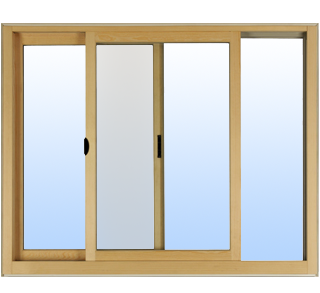


* Fixed / non-removable grids – These are windows with non-removable obstructions making the window look and feel like individual pieces of glass.