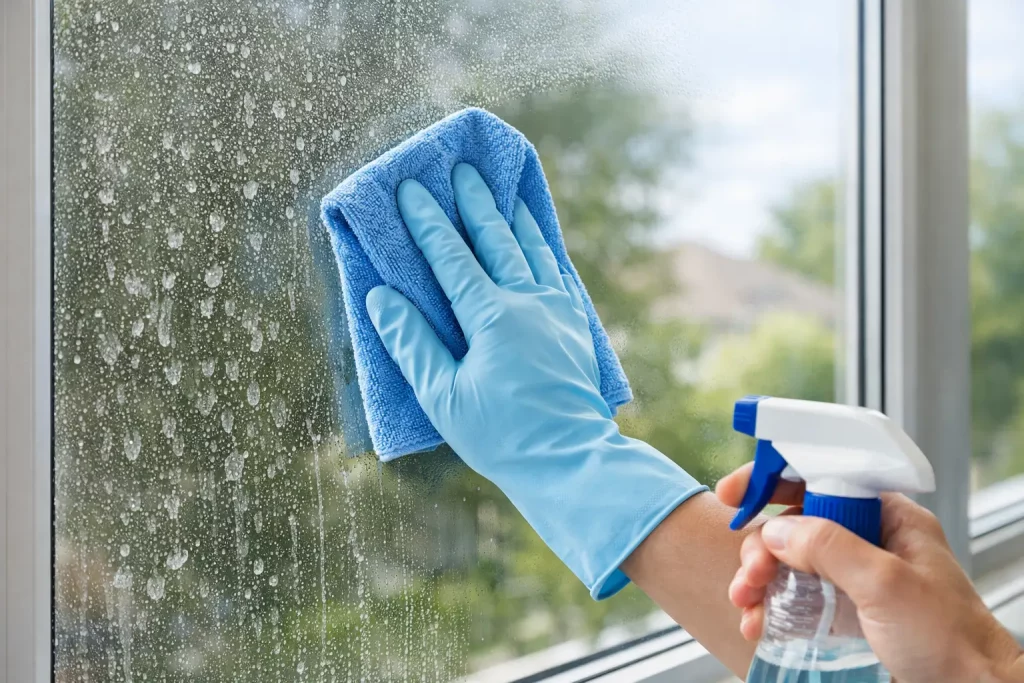
Hard water spots can make freshly cleaned windows look cloudy again within days. They often show up after sprinkler overspray, rainwater runoff, or repeated splashing from a hose, leaving white dots and dull streaks that ordinary glass cleaner will not remove. Knowing how to remove hard water spots safely can protect the appearance of your windows without scratching the glass or damaging nearby frames.
The key is acting before mineral deposits have time to bond tightly to the surface. Light spots can usually be handled with careful cleaning at home. Older, neglected buildup may be etched into the glass, which is a different problem and may require professional evaluation.
Hard water contains dissolved minerals, most commonly calcium and magnesium. When droplets dry on glass, the water evaporates but the minerals remain. At first, those deposits look like a light haze or small white rings. Over time, repeated wetting and drying can create a crusty film that blocks clarity and makes windows look permanently dirty.
Not every spot on a window is a hard water spot. Paint overspray, tree sap, pollen, oxidation from screens, and construction debris each need a different cleaning approach. Mineral spots usually feel slightly rough or chalky and often appear in a pattern that follows water flow, sprinkler spray, or runoff from a roofline.
For mild to moderate mineral deposits, start with the least aggressive method. Cleaning too aggressively can scratch glass, damage coatings, or leave marks on vinyl, aluminum, wood, and painted frames.
White distilled vinegar is acidic, which helps loosen calcium-based mineral deposits. Mix equal parts white vinegar and water in a spray bottle. Spray the solution directly onto the affected glass, keeping it away from unfinished stone or delicate surrounding materials. Let it sit for a few minutes, but do not allow it to dry completely on the window.
Use a clean microfiber cloth or a non-abrasive sponge to wipe the area in small, overlapping motions. Then rinse the glass with clean water and dry it with a fresh microfiber towel or a quality squeegee. Drying matters because allowing rinse water to air-dry can leave new mineral marks behind.
For a small patch of stubborn spots, soak a folded paper towel or microfiber cloth with the vinegar solution and press it against the glass for five to 10 minutes. This gives the solution more time to soften the deposits without resorting to harsh scrubbing.
If vinegar does not make a noticeable difference after a couple of careful attempts, a commercial hard water spot remover made specifically for glass may be appropriate. Read the manufacturer directions closely. Some products are more acidic or abrasive than homeowners expect, and they may not be safe for tinted windows, specialty coatings, nearby stone, or painted finishes.
Test any product in a small, less-visible area first. Use only the recommended applicator, and rinse thoroughly when finished. A cleaner that removes minerals from bare glass may still create problems if it runs onto a window frame, sill, masonry surface, or landscaping.
Once mineral residue is removed, clean the full pane so the treated area does not stand out. A mild window-cleaning solution, clean scrubber, and squeegee will produce a more even result than wiping glass with paper towels. Work from the top down, wipe the squeegee blade between passes, and dry the edges with a lint-free towel.
This final step also makes it easier to see whether the spots are truly gone. Sometimes the mineral deposit has been removed, but the glass beneath it has already become etched.
Etching happens when minerals and environmental contaminants sit on glass long enough to alter the surface itself. Instead of a deposit resting on top of the glass, the damage is within the glass. It may look like dull white spotting, a cloudy patch, or faint circular outlines that remain after thorough cleaning.
A simple way to check is to clean a small area carefully. If the roughness disappears but the cloudy marks remain, the glass may be etched. If the spots do not change at all, they may be more than a surface deposit.
Etched glass cannot always be restored with household products. Polishing systems may help in limited situations, but they require experience and can create optical distortion if used incorrectly. Replacement may be the more practical option when damage is severe, especially on insulated or specialty glass. Professional window cleaners can help identify whether you are dealing with removable buildup or permanent damage before you spend money on products that will not solve the problem.
It is understandable to reach for whatever seems strongest when spots will not come off. That is where many window problems begin. Avoid steel wool, abrasive scouring pads, gritty powders, and razor blades unless you have the proper training and know the glass is safe for that method. Modern windows may have coatings that are easily damaged, and even a small scratch can become more visible in direct sunlight.
Do not use harsh acids without understanding where they can run or splash. Acidic cleaners can damage natural stone, masonry, metal trim, painted surfaces, and landscaping. Never mix vinegar or any acidic cleaner with bleach or other chemical products.
Also avoid cleaning hot glass in full sun. The solution can dry before it has time to work, leaving streaks and making the job harder. Choose a cool, overcast time of day when possible, or work on the shaded side of the property.
The best way to deal with hard water spots is to reduce the source of the water. Check whether sprinklers are hitting windows, especially around storefronts, entryways, ground-level office glass, and landscaped residential beds. Redirecting a sprinkler head by a few inches can prevent years of mineral buildup.
Look above the affected windows as well. Overflowing gutters, leaking downspouts, roof runoff, and dripping air-conditioning lines can repeatedly wet the same section of glass. In Western Pennsylvania, seasonal debris can contribute to drainage issues, so regular gutter cleaning can help protect more than the roofline.
For commercial properties, include exterior glass in the routine maintenance plan rather than waiting until buildup is obvious. Customers, tenants, and visitors notice cloudy entrance glass quickly. Regular service removes fresh environmental residue before it turns into stubborn deposits, while also helping property managers spot drainage or sprinkler issues early.
A professional cleaning service is a sensible choice when hard water spots cover multiple windows, affect second-story glass, or keep returning despite your efforts. It is also the safer route for large commercial panes, difficult access areas, skylights, and windows near delicate finishes.
The value is not only in getting clearer glass. An experienced team can use appropriate tools, identify potential etching, and clean the surrounding frames, tracks, and screens without taking unnecessary risks on ladders. For Pittsburgh-area homes and businesses, A Clearvue provides insured, professional window cleaning with straightforward scheduling and free estimates.
A clear window should look clear, not merely less spotted. Address the source of the water, remove fresh deposits gently, and get help before mineral buildup becomes a permanent mark on the glass.



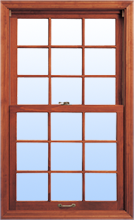
* Suspended Grids / False Grids – the grids are between your panes of glass.
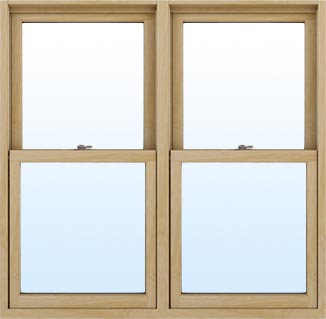
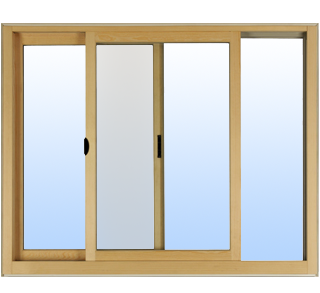


* Fixed / non-removable grids – These are windows with non-removable obstructions making the window look and feel like individual pieces of glass.