Exterior windows collect more than everyday dust. In Western Pennsylvania, rain, pollen, road grit, hard-water minerals, and seasonal debris can build up quickly, leaving glass dull even when the inside looks clean. Knowing how to clean exterior windows properly can improve your home’s appearance, bring more natural light indoors, and help you spot developing issues around frames, screens, and gutters.
The right method depends on the height of the windows, the type of glass, and the amount of buildup present. Ground-level panes are usually manageable for a homeowner with the right tools. Second-story windows, difficult access points, and commercial glass deserve a more cautious approach.
A bright, sunny day may seem ideal for window cleaning, but direct sun can cause your solution to dry before you can squeegee it away. That is one of the most common reasons exterior windows end up streaky. Choose an overcast day, or work on the shaded side of the building first.
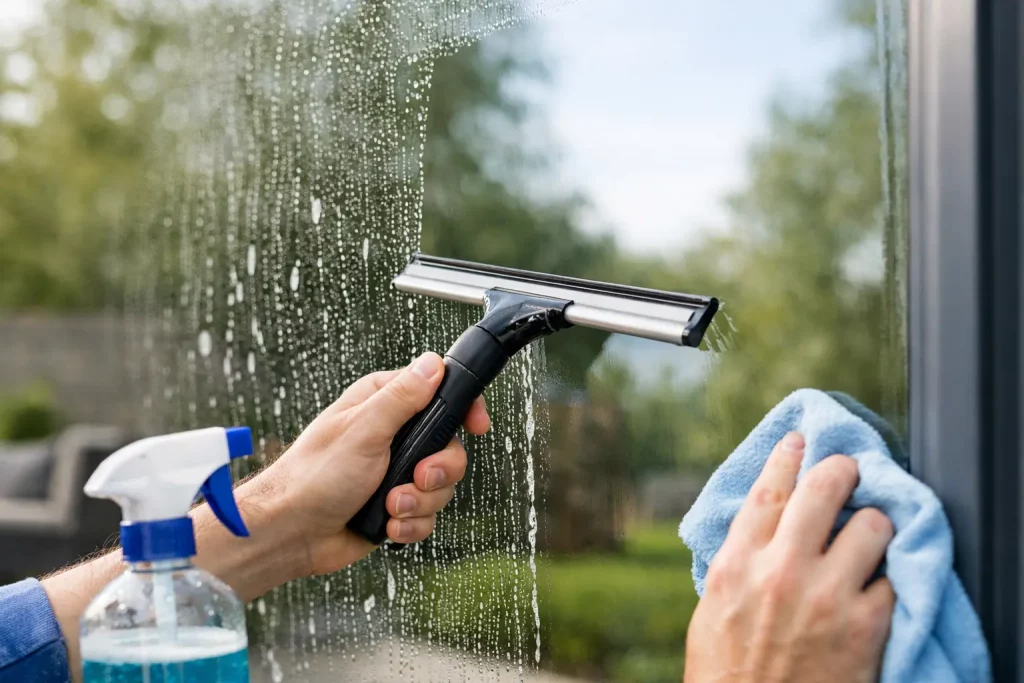
You do not need a cabinet full of specialty products. A bucket of clean water, a small amount of dish soap, a soft scrubber or microfiber washer, a quality squeegee, microfiber towels, and a soft brush for frames will handle most routine cleaning. For higher windows that can be reached safely from the ground, use an extension pole designed for window-cleaning tools.
Avoid abrasive pads, rough paper towels, and harsh cleaners. They can scratch glass, damage window coatings, or leave lint behind. Ammonia-based products may also be a poor choice near certain tinted glass, painted surfaces, or sensitive landscaping.
Before bringing out a ladder, look carefully at the ground below. Uneven landscaping, wet pavement, steep slopes, and loose gravel make ladder work far riskier than it appears. If you cannot reach a window comfortably while maintaining three points of contact on a properly positioned ladder, it is better to leave that pane to an insured professional.
Begin with the window frame, sill, and screen area rather than the glass itself. Brushing away loose cobwebs, leaves, and dirt prevents muddy streaks from running across freshly cleaned glass. If screens are removable, take them out and set them aside for separate cleaning.
Mix a modest amount of dish soap into a bucket of cool or lukewarm water. Too much soap creates residue, so a little goes a long way. Wet the glass thoroughly with your scrubber, paying extra attention to bird droppings, pollen film, and stuck-on dirt. Let stubborn spots soften for a moment instead of scrubbing aggressively.
Next, use the squeegee from the top of the window downward. Professional cleaners often use a side-to-side technique, but straight vertical pulls are easier for most homeowners to control. After each pass, wipe the rubber blade with a clean microfiber towel. This small step keeps dirt from being dragged back onto the glass.
Finish by wiping the perimeter of the pane and the sill with a dry microfiber cloth. Check your work from an angle, since streaks and missed spots are often easier to see when light reflects off the glass. If a streak remains, it may be from a dirty squeegee blade, too much soap, or solution drying too quickly.
Clean one window at a time instead of wetting an entire side of the house. That approach gives you better control and helps prevent water from drying on the surface before you are ready to remove it.
Clean windows can still look neglected when screens are dusty or tracks are full of debris. Rinse removable screens gently with a hose, then wash them with mild soapy water and a soft brush. Allow them to dry completely before reinstalling them.
For tracks, use a vacuum with a narrow attachment or a soft brush to remove loose debris. Wipe the area with a damp cloth, then dry it well. This is also a good opportunity to look for cracked seals, damaged screens, clogged weep holes, or worn weatherstripping that may need attention.
Routine dirt usually comes off with soapy water and a squeegee. Mineral deposits and hard-water spots are different. They can leave cloudy white marks that remain even after a standard wash, especially on windows near sprinklers or surfaces exposed to repeated runoff.
For light mineral spotting, try a mixture of equal parts white vinegar and water on a small, inconspicuous area first. Apply it with a soft cloth, allow it to sit briefly, then rinse and squeegee the glass. Do not use acidic solutions on natural stone, unsealed masonry, or painted trim, and keep them away from plants.
Heavy mineral deposits, paint overspray, construction residue, or etched glass may require a different process. At that point, stronger chemicals or scraping can do more harm than good if the glass type and surface condition are unknown. Tempered glass, older panes, and windows with specialty coatings deserve particular care.
Pollen is usually easier to manage, but it often returns quickly during spring. A rinse alone can leave a thin yellow-green film once the water dries. Washing with a mild solution and drying the glass with a squeegee provides a cleaner result that lasts longer.
There is a practical line between a satisfying weekend project and a job with real safety or property-risk concerns. Tall windows, skylights, glass above sloped roofs, and windows blocked by landscaping can be difficult to clean safely. The same is true for commercial properties where foot traffic, storefront presentation, and scheduling need to be managed carefully.
Professional service is often the better choice when windows have not been cleaned for several seasons, when water spots are severe, or when you need consistent results across an entire property. A trained crew has the equipment to reach difficult areas, work efficiently, and reduce the chance of damaged screens, scratched glass, or unsafe ladder use.
For homeowners, professional exterior cleaning can also make seasonal maintenance easier to plan. Clean glass shows off the care you put into your home, while a close inspection may reveal clogged gutters, failing caulk, or other small concerns before they become larger repairs. For businesses, clean storefront and office windows help create the polished first impression customers, tenants, and visitors expect.
A Clearvue provides licensed, insured window cleaning for homes and commercial properties throughout the Pittsburgh area, with trained, background-checked employees and straightforward estimates. That level of service can be especially valuable when access, safety, or a demanding property schedule is involved.
Most homes benefit from exterior window cleaning at least twice a year, commonly in spring and fall. That schedule removes winter grime before brighter weather arrives and clears away pollen, leaves, and summer buildup before colder months set in.
However, frequency depends on where the property sits. Homes near busy roads, construction activity, mature trees, or sprinkler systems may need more frequent attention. Commercial storefronts and customer-facing offices often need regular cleaning because fingerprints, rain spots, and street dust are visible much sooner.
Do not judge timing by the glass alone. If sills are holding debris, screens look gray, or rainwater is leaving dirty trails down the siding, it is likely time for a full exterior window cleaning rather than a quick touch-up.
Clean exterior windows do more than sharpen curb appeal. They let you see your property clearly, bring in the light you want, and make routine maintenance feel more manageable. Start with the windows you can reach safely, use simple tools with care, and treat hard-to-access glass as a reason to call a qualified local team rather than take an unnecessary risk.



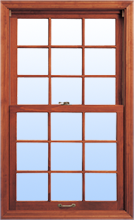
* Suspended Grids / False Grids – the grids are between your panes of glass.

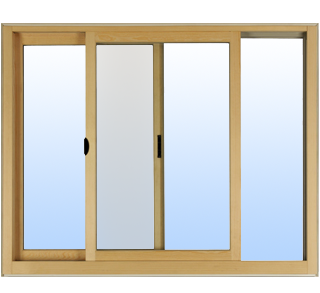


* Fixed / non-removable grids – These are windows with non-removable obstructions making the window look and feel like individual pieces of glass.