
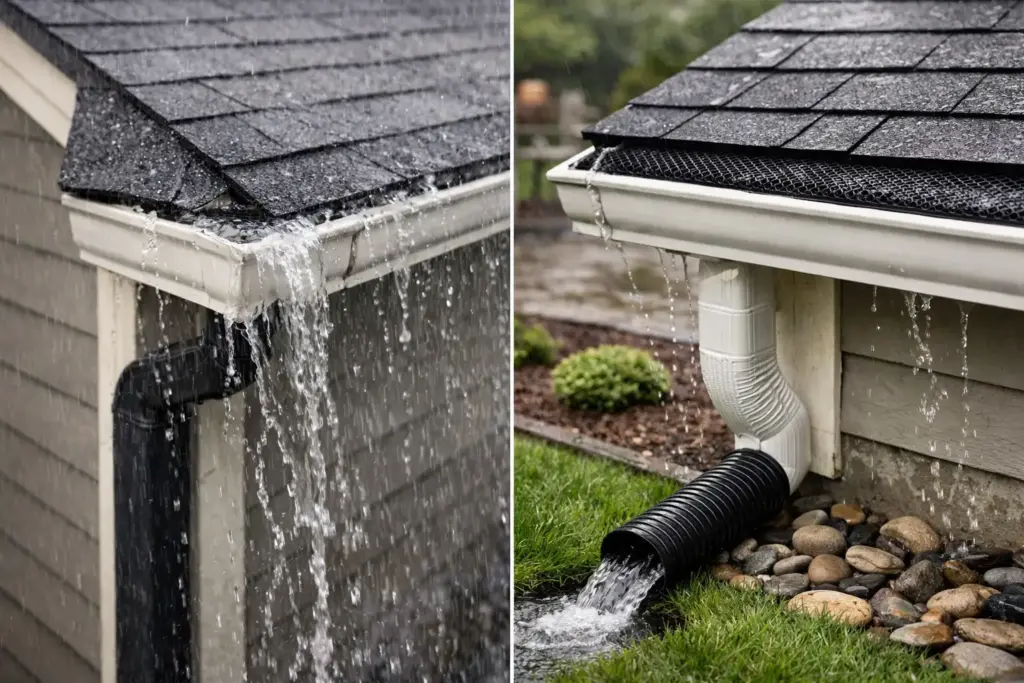
A gutter overflow damage prevention example often starts with a problem that looks small from the ground: water spilling over one corner of the roof during a hard Western Pennsylvania rain. By the time the homeowner notices damp mulch, a stained soffit, or water near the foundation, the gutter has likely been struggling for more than one storm. A timely cleaning and a few basic corrections can keep that water where it belongs – moving safely away from the home.
For homeowners and property managers, gutter care is not only about keeping the exterior neat. Working gutters help protect roofing edges, siding, landscaping, foundations, walkways, and entry areas. That matters especially around Pittsburgh, where falling leaves, spring rain, summer downpours, and winter freeze-thaw cycles can all put a drainage system to work.
Consider a two-story home with mature trees along the back of the property. The homeowner sees water running over the gutter above the rear patio whenever rain is heavy. At first, it seems like the storm is simply too strong for the gutter to handle. But a closer inspection finds a more common combination of issues: wet leaves and roof grit have built up near the downspout opening, and the downspout extension has been knocked loose at ground level.
Because the outlet is partially blocked, water backs up in the gutter channel. Once it reaches the top edge, it spills over the side closest to the house. The overflow saturates the soil beside the foundation and splashes against the fascia and siding. Meanwhile, the loose extension allows the water that does make it through the downspout to discharge too close to the home.
The prevention work is straightforward. The gutter and downspout are cleared of debris, the outlet is checked for compacted material, and the extension is secured so water drains away from the foundation. The technician also notices that one hanger is loose, creating a low spot where water and debris collect. Refastening that section restores the gutter’s slope and helps it drain properly.
That one service visit addresses several risks at once. It reduces the chance of water entering the foundation area, limits unnecessary moisture against exterior materials, and helps prevent a slippery patio during the next storm. It also gives the homeowner a clear picture of what should be watched between scheduled cleanings.
A gutter is designed to collect roof runoff and direct it into downspouts. When debris blocks that path, water takes the easiest route available. Unfortunately, that route is often over the gutter edge, behind the gutter, or down exterior walls.
Overflowing water can create trouble gradually. Repeated wetting can stain siding and masonry, wash away mulch, erode soil, and create muddy areas around entrances. If water is repeatedly directed toward the foundation, it may contribute to damp basement conditions or worsen existing drainage concerns. No gutter cleaning service can solve every foundation issue, but clear gutters and properly directed downspouts are a practical first line of defense.
There can also be roof-edge concerns. Standing water adds weight to a gutter, particularly when leaves, twigs, and shingle grit are holding moisture in place. Over time, that weight can strain fasteners and pull the gutter away from the fascia. Water that gets behind a loose gutter may affect the wood components it is attached to.
In winter, a clogged gutter can hold water that freezes and expands. Ice alone does not always mean a gutter is failing, but debris and poor drainage give it more places to collect. Keeping the system clean before winter helps reduce avoidable buildup.
You do not need to climb a ladder to spot every gutter issue. Walk around the property after a steady rain and look for patterns. Water pouring over the same section, dark streaks below the gutter line, sagging channels, or a downspout that barely discharges are all signs that service may be needed.
Pay attention to the ground as well. Soil that is consistently washed out below a roofline, mulch pushed away from the foundation, or puddles near a downspout can indicate that runoff is not being managed well. On commercial properties, these conditions can affect curb appeal and may create wet, slippery areas near customer or employee entrances.
Inside the home, a musty basement smell or dampness along an exterior foundation wall can have several causes. Gutters may not be the only explanation, but they are worth checking before a small drainage problem becomes a larger repair conversation.
A proper gutter visit involves more than removing visible leaves from the top of the channel. Debris often packs tightly at downspout openings, especially after it has been wet for several days. That material needs to be cleared so water can move through the full system.
The gutters should also be checked for obvious low spots, loose hangers, separated connections, and sections that are pulling away from the roofline. Light maintenance can correct certain minor concerns before they become more serious. If a system has extensive damage, incorrect installation, or structural deterioration, a homeowner may need a qualified gutter repair or replacement contractor. Knowing the difference helps set realistic expectations.
Downspouts deserve equal attention. A clean gutter cannot do its job if water cannot exit through the downspout or if discharge ends right beside the foundation. Extensions and splash blocks should guide water away without sending it toward a neighboring property, walkway, or low area that already holds water.
Professional service also reduces the risks of doing the work yourself. Ladders, wet debris, uneven ground, and roofline work can be dangerous. For homes with steep grades, multiple stories, or difficult access, hiring an insured, trained team is often the safer and more convenient choice.
There is no single gutter-cleaning schedule that fits every home. A property surrounded by large deciduous trees may need attention more often than a newer development with fewer trees. Pine needles, seed pods, roof moss, and nearby branches can all affect how quickly debris accumulates.
For many Western Pennsylvania homes, cleaning in late spring and again after the main fall leaf drop is a sensible starting point. Some properties benefit from an additional visit after heavy seasonal debris or before winter. The goal is not to clean on a calendar just for the sake of it. The goal is to prevent material from sitting long enough to block drainage.
Property managers should consider the building’s use and exposure. A storefront with gutters above a customer-facing entrance needs reliable drainage to help keep the approach clean and safe. Multi-unit properties may have longer rooflines and more downspouts to monitor, making routine service easier to plan than emergency calls after a storm.
Between professional cleanings, a few observations can help catch trouble early. After major rain, check that each downspout is flowing and that water is moving away from the building. Keep landscaping from blocking splash blocks or extensions, and watch for branches that shed directly onto the roof.
Gutter guards can reduce the amount of larger debris entering some systems, but they are not maintenance-free. Their effectiveness depends on the guard style, roof design, nearby trees, and the debris common to the property. Fine particles and roof grit can still collect, and material can build up on top of certain guards. A guard may be helpful, but it should not replace periodic inspection and cleaning.
The most useful approach is consistent attention before a storm exposes the problem. When gutters are clear, secured, and draining away from the home, rainwater has a better path to follow. For Pittsburgh-area homeowners and property managers who prefer dependable help, A Clearvue can provide professional gutter cleaning and light maintenance with the care expected from a local, insured service team.
If you have seen water spill over the same gutter section more than once, it is a good time to address it before the next stretch of heavy rain turns a manageable maintenance need into avoidable exterior damage.




* Suspended Grids / False Grids – the grids are between your panes of glass.



* Fixed / non-removable grids – These are windows with non-removable obstructions making the window look and feel like individual pieces of glass.