
A storefront cleaning first impression example can be as simple as two neighboring businesses on a rainy Pittsburgh morning. One has clear front glass, a clean door handle, and an entryway free of salt, leaves, and smudges. The other has streaked windows, fingerprints around the door, and debris gathered along the threshold. Both may offer excellent service inside, but customers form an opinion before they ever step through the door.
For retail shops, offices, restaurants, salons, medical practices, and professional buildings, the condition of the storefront sends a message about the care given to the rest of the property. Clean windows and a well-kept entrance do not replace good customer service. They do make it easier for customers to arrive with confidence.
A storefront is a customer’s first physical point of contact with a business. People notice more than they realize: cloudy glass, cobwebs in the corners, water spots, faded handprints, and dirt around the bottom of a door. These details may seem small to someone who sees them every day, but a first-time visitor sees the space with fresh eyes.
That first look affects perception. A bright, clean entrance can make a business appear organized, attentive, and welcoming. Dirty glass can suggest that exterior maintenance is being overlooked, even when the interior is spotless and the team is highly capable.
This is especially true for businesses where appearance is closely tied to trust. A customer walking into a dental office, financial office, boutique, restaurant, or property management office expects a professional environment. Clean storefront windows help reinforce that expectation before a conversation begins.
Consider a small professional office along a busy Western Pennsylvania commercial corridor. Its front windows face traffic, and the glass is visible from the parking area. Over several weeks, road dust, rain residue, fingerprints, and pollen build up on the exterior. On the inside, employees touch the door glass throughout the day, leaving smudges around the handle and edges.
Nothing about the office is unsafe or poorly run. Still, a prospective client pulling into the lot may hesitate for a moment. The windows look dull. The entrance feels less cared for than neighboring properties. That hesitation is not always conscious, but it can influence how the client views the business before the appointment starts.
Now picture the same office after professional storefront cleaning. The glass is clear from both sides, the frames are wiped down, the door is free of handprints, and the entryway looks cared for. Natural light reaches the reception area, window signage is easier to read, and the building looks more inviting from the street. The office has not changed its services or pricing. It has simply removed a barrier between its business and a confident first impression.
That is the practical value of storefront cleaning. It is not about making a building look flashy. It is about making sure the outside reflects the standards customers will experience inside.
Customers do not inspect a storefront like a cleaning professional would, but a few conditions stand out quickly. Window clarity is usually first because glass reflects light, street activity, and the surrounding property. Streaks and haze are particularly noticeable on sunny days or when interior lights are on in the evening.
The entry door also matters. Door glass, handles, push plates, and lower panels collect fingerprints and grime quickly. During wet weather, salt residue and mud can gather around the entrance, making an otherwise clean building look neglected.
Signage is another factor. Window decals, business hours, promotional graphics, and leasing information work better when customers can see them through clean glass. If a storefront display is part of the sales experience, dirty windows reduce its impact from the sidewalk or parking lot.
Finally, customers notice contrast. A clean building beside a neglected one tends to stand out. In a shopping center or office complex, a maintained storefront can help a tenant look established and ready for business.
Commercial storefronts in Pittsburgh and throughout Western Pennsylvania deal with changing weather throughout the year. Spring pollen can coat glass quickly. Summer storms leave water spots and windblown debris. Fall brings leaves, dust, and moisture around entrances. Winter road salt and slush can leave stubborn residue on lower windows and doors.
The right cleaning schedule depends on the property. A storefront on a high-traffic road, near construction activity, or in a busy retail center may need more frequent service than a small office set back from the street. Restaurants, salons, and retail shops may also benefit from regular interior glass cleaning because customers and employees touch the entrance throughout the day.
There is a trade-off between cleaning frequency and budget, but waiting until windows look obviously dirty is not always the best approach. At that point, buildup may already be affecting the customer experience. A planned schedule allows a business to maintain a consistent appearance and avoid last-minute cleaning before an event, inspection, tenant visit, or important client meeting.
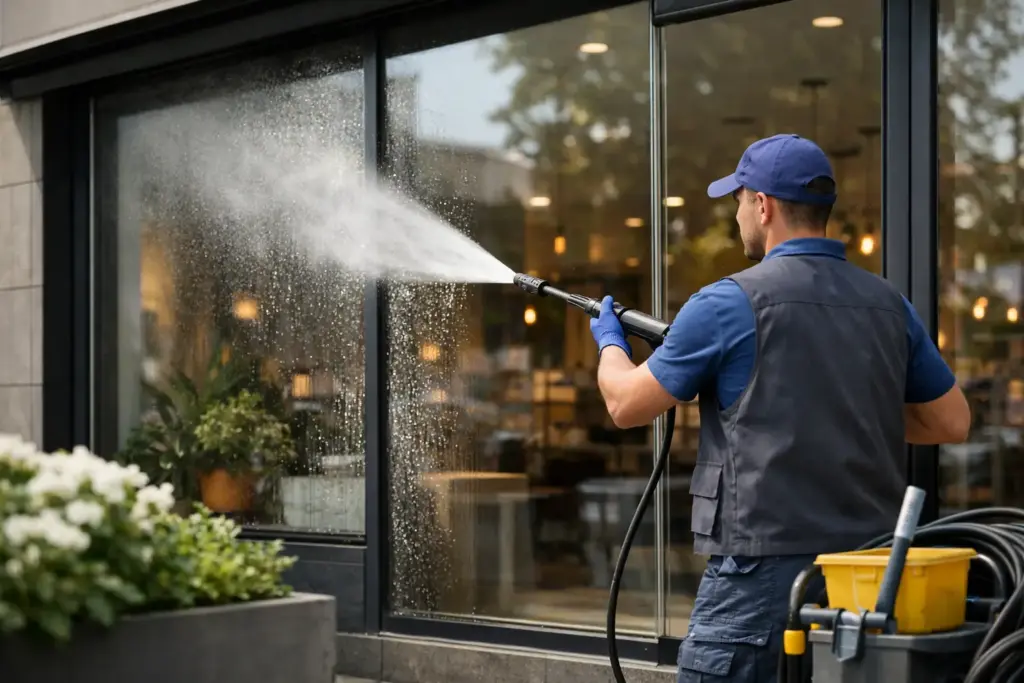
A paper towel and glass cleaner can remove an obvious fingerprint, but it often leaves lint, streaks, and missed edges. Professional window cleaning is designed to produce a clearer result across the full pane, including the corners and lower areas where soil tends to collect.
For commercial properties, the work should also be performed with attention to the surrounding space. A dependable crew arrives as scheduled, works carefully around customers and staff, and respects the building’s access requirements. For property managers, that reliability matters as much as the appearance of the glass. A missed appointment or poorly coordinated service can create more work for the people responsible for the property.
At A Clearvue, commercial window cleaning is approached as part of property presentation, not as an afterthought. Businesses benefit from insured, professional service that supports a cleaner, more welcoming appearance without asking employees to take on another maintenance task.
Business owners and property managers can spot many first-impression issues with a brief walk from the parking lot to the front door. Look at the storefront as a new customer would, preferably in daylight and again after interior lights are on.
Check these areas:
If these items stand out during a quick inspection, customers will likely notice them too. The good news is that regular attention can prevent a small issue from becoming part of the property’s overall image.
Curb appeal is often associated with residential properties, but commercial curb appeal has a direct business purpose. It helps customers recognize the location, feel comfortable entering, and trust that the business pays attention to details. For office buildings and retail centers, it can also support tenant satisfaction and make common areas feel better maintained.
Clear windows also improve the experience inside. More natural light can make reception areas, product displays, and workspaces feel brighter. For businesses with attractive interiors or merchandise near the window, clean glass gives passersby a better view of what is offered.
A polished storefront will not be the only reason someone chooses a business. Value, service, location, and reputation still matter. But the storefront influences the moment when a visitor decides whether the business feels welcoming enough to enter. That moment is worth protecting.
Before your next busy season, client visit, or property walkthrough, stand across the lot and view your entrance as a customer would. If the glass and entryway are not presenting the business at its best, a professional cleaning schedule can be one of the simplest ways to restore confidence at the door.



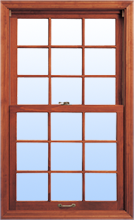
* Suspended Grids / False Grids – the grids are between your panes of glass.
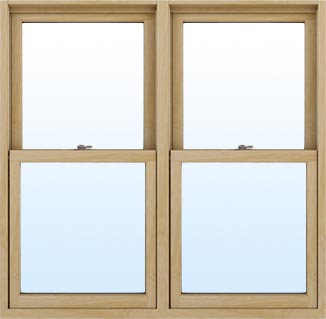
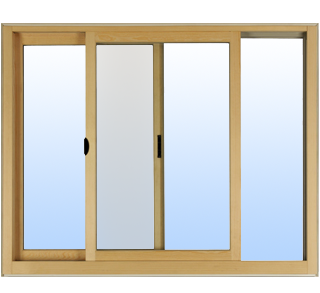
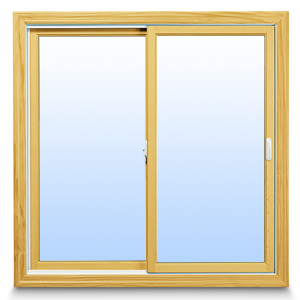

* Fixed / non-removable grids – These are windows with non-removable obstructions making the window look and feel like individual pieces of glass.